At Outdoor Adventure Training, cardio is not random mileage.
It’s structured, progressive, and specific to your outdoor goals.
Most programs include 2–3 cardio sessions per week, typically structured like this:
- 1–2 midweek sessions
- 1 longer weekend session
Each session has a purpose. Over time, those sessions build durability, aerobic efficiency, and real-world capacity on the trail.
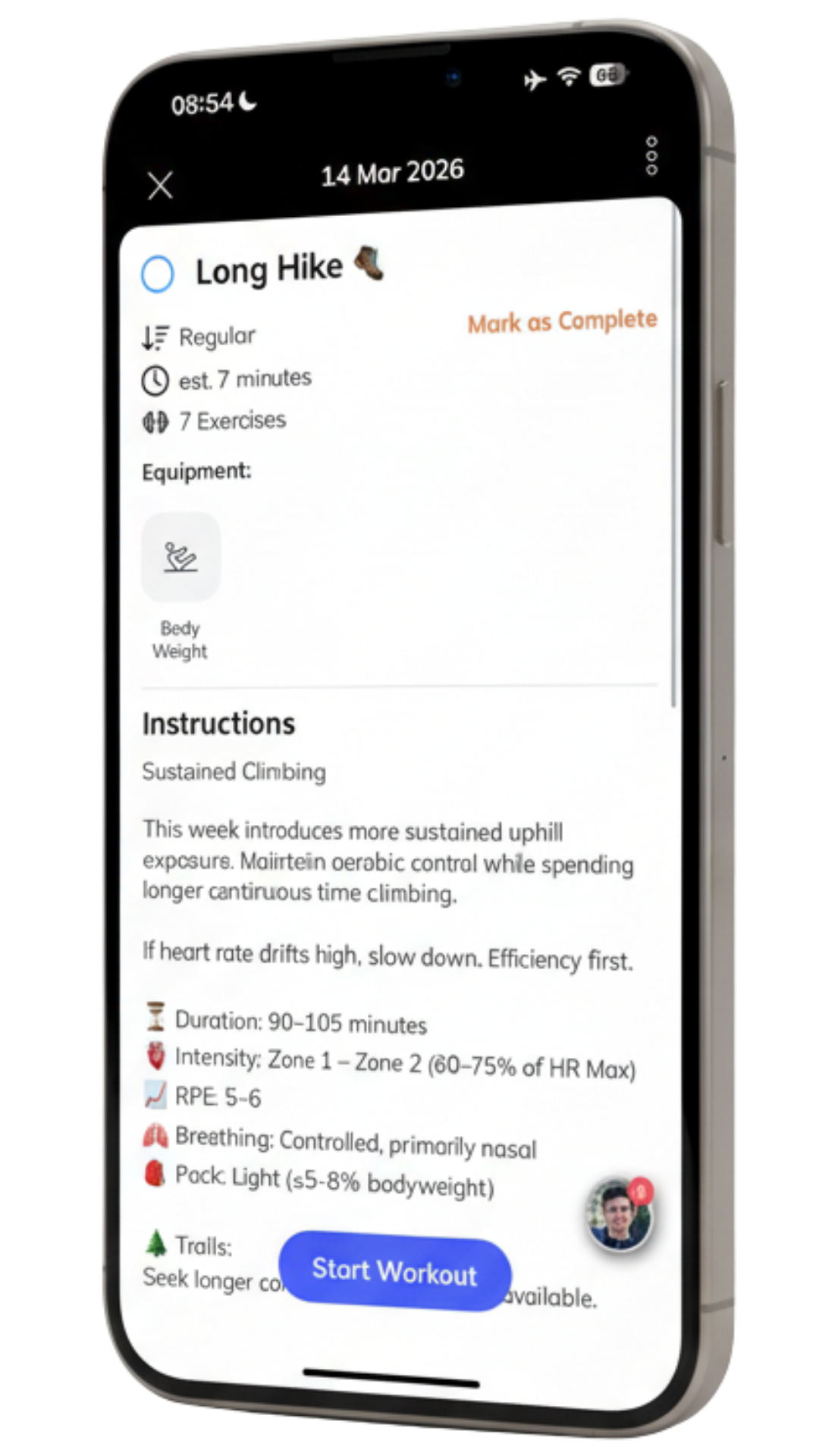
The Foundation: Long Hikes
For most hiking and backpacking programs, Saturday long hikes are the cornerstone.
These sessions build:
- Tolerance for time on feet
- Aerobic endurance
- Movement efficiency
- Confidence under load
Over the course of the program, we gradually adjust acute variable such as:
- Duration
- Elevation gain
- Pack weight
- Terrain demands
Progression happens intentionally, not aggressively.
And it does not increase forever.
We use strategic deload weeks and strength-focused blocks to allow recovery and adaptation.
Midweek Cardio Sessions
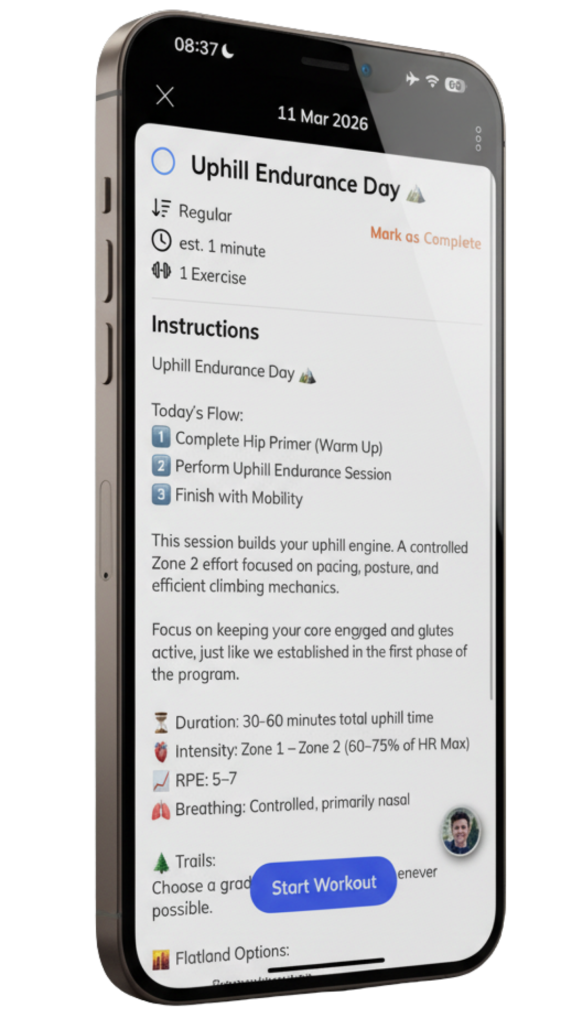
Midweek sessions vary depending on the program and phase.
These may include:
- Uphill endurance sessions
- Rucking days
- General aerobic conditioning
- Incline treadmill work
- Stair climbing
- Zone-based steady efforts
Each style has a purpose. Some improve base fitness while others build capacity and resilience.
Our Periodized Approach
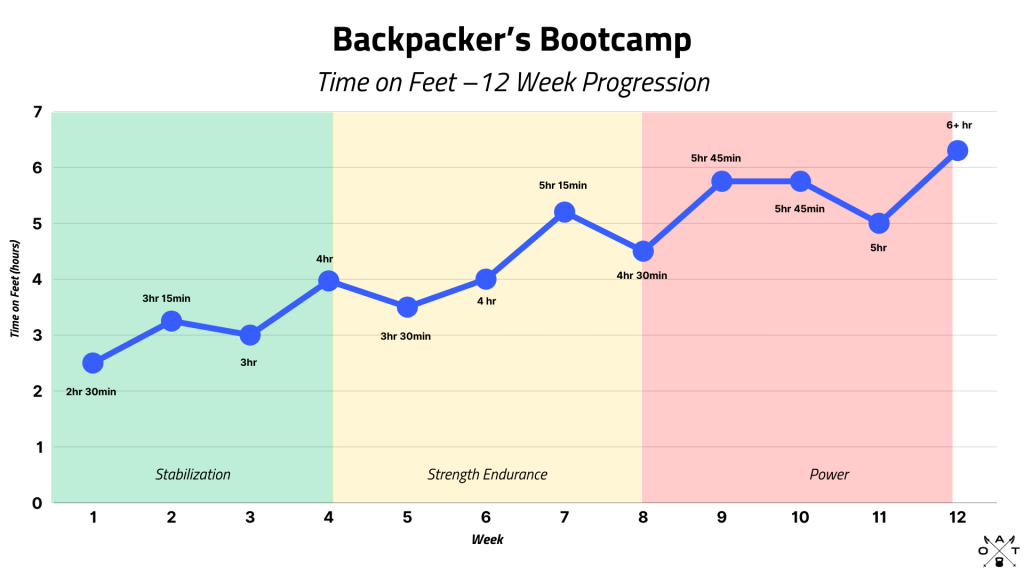
Cardio at OAT follows the same three phases as your strength training: Stability, Strength, and Power.
Each phase builds on the last. We don’t rush intensity. We earn it.
Stabilization Phase: Build the Aerobic Base
This is where everything starts.
During Stabilization Phase, most of your cardio stays in Zone 1–2. That means steady effort, controlled breathing, and sustainable pacing. You’re building efficiency, not chasing exhaustion.
Benefits of this phase:
- Builds a strong aerobic engine without overstressing your joints
- Improves recovery between strength sessions
- Develops connective tissue durability for hiking and rucking
- Teaches pacing, breathing control, and movement efficiency
This phase creates the foundation that allows you to safely handle harder work later.
Strength Phase: Increase Capacity
Once your base is established, we begin introducing slightly more demand.
You’ll still complete plenty of Zone 1–2 work, but we start layering in controlled Zone 3 efforts, longer climbs, or heavier load exposure when appropriate.
Benefits of this phase:
- Raises your aerobic threshold so you can climb longer without fading
- Improves your ability to handle moderate fatigue
- Increases sustainable uphill power
- Supports heavier strength training blocks without burning out
This is where you begin to feel more capable on real terrain.
Power Phase: Refine & Prepare for Your Objective
In the final phase, cardio becomes more specific to your goal.
Efforts may become slightly sharper. Vertical gain may increase. Sessions may simulate the demands of your upcoming hike, trek, or climb. But we still maintain your aerobic base.
Benefits of this phase:
- Improves short-term climbing power and stamina
- Increases confidence under higher effort
- Prepares you for elevation gain and sustained output
- Sharpens performance without sacrificing durability
We also strategically include de-load weeks and volume adjustments so intensity never increases indefinitely.
The goal isn’t to exhaust you, it’s to prepare you for the mountain.
We Don’t Prescribe Miles
You’ll notice something different in OAT programming:
We do not tell you “Hike 8 miles” or “Get 3,000 feet of vert.”
Instead, we program around:
- Total time on feet
- Target heart rate zone
- Effort level (RPE)
- Desired training stimulus
Why? Because terrain varies. Elevation varies. Fitness varies.
Time and intensity are more reliable training tools than distance.
Do I Need a Heart Rate Monitor?
Not required, but recommended.
A chest strap heart rate monitor gives use the most useful and accurate data, especially during aerobic base work. Wearable devices can be used, but accuracy may vary.
If you don’t have either one, we guide you using:
- Breathing cues
- Conversational pace tests
- RPE scales
- Movement control indicators
You will always have a way to gauge effort.
What Your Workouts Look Like
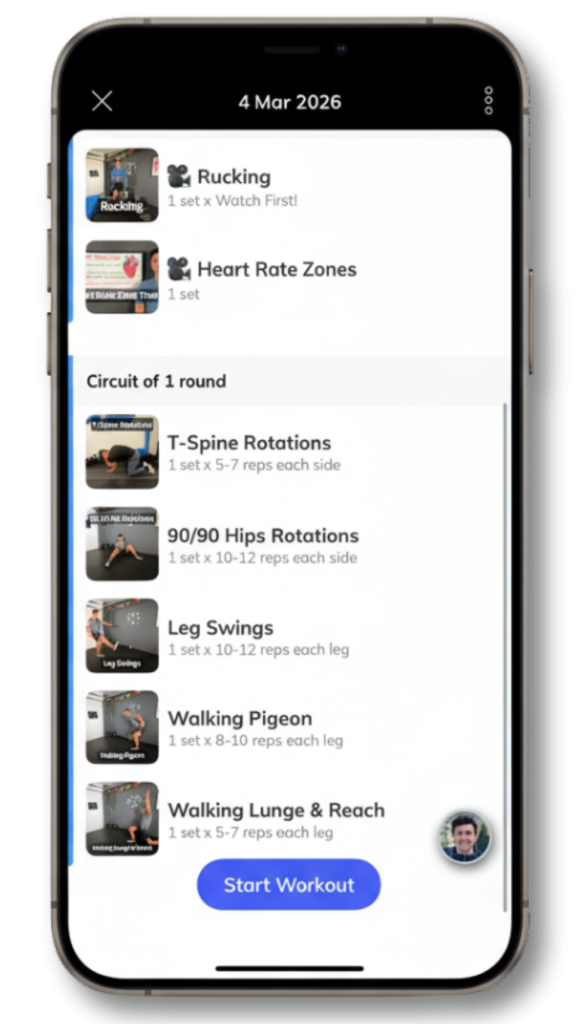
Each cardio session inside the app includes:
- A short video explaining the goal of the session
- Clear written instructions
- Warm-up movement guidance
- Intensity targets
- Duration guidelines
- Terrain suggestions
- Flatland alternatives when needed (e.g. treadmill, StairMaster, stairs)
You will always know what your should be doing, why you’re doing it, and how hard it should feel.
Big Picture
Our goal with cardio is not to exhaust you.
It’s to systematically build your aerobic capacity, durable joints and connective tissue, confidence under load, and fortify sustainable movement patterns
So when your objective arrives, your cardiovascular fitness is not the limiting factor.


