
How to Train for a Big Winter
Everybody is talking about the Super El Niño. Here's what it actually changes about your training.
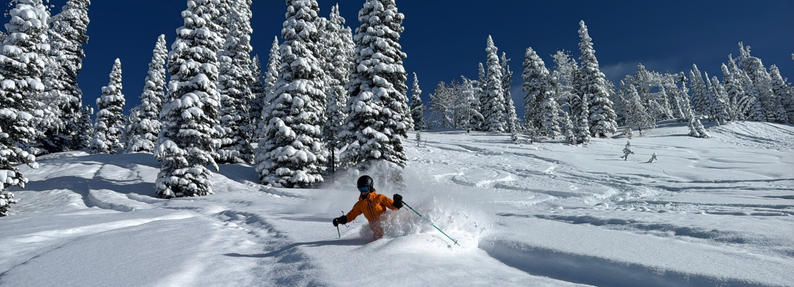
Everybody is talking about the Super El Niño. Every forecaster and ski blog on the planet has a take on what this winter could bring, and they're not wrong. The ocean temperatures in the Pacific really are historic.
But this is not another forecast article. We're not going to tell you how much snow your mountain is going to get, because we have no idea and neither does anybody else.
What we do know is that the only thing within your control is how you show up this season, and what you start doing right now so you can be one hundred percent ready when the lifts start spinning.
What A Super El Niño Means
A strong El Niño does have some implications across North America, and there are really only three worth understanding.
It could be really deep in places. The storm track shifts a little further south, which favors California, the Southwest, and the southern Rockies.
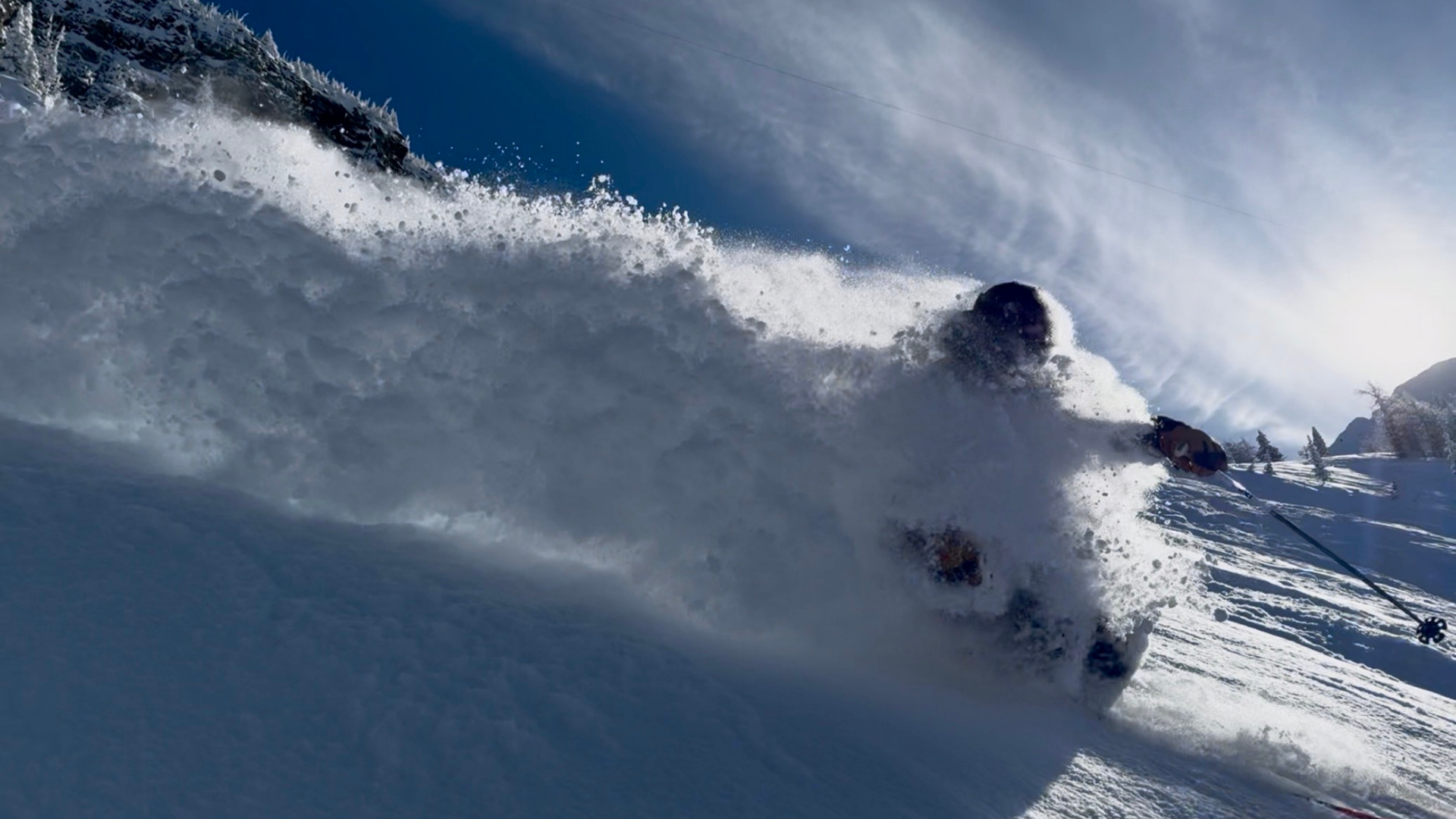
The snow could be heavier and wetter. Higher freezing levels make denser snow, which takes more force to turn in. This is the one that actually matters for training, and almost nobody talks about it.
Some places could get less. Further north, in the Pacific Northwest and into British Columbia, the signal leans warm.
These aren't predictions. They're historical trends, and forecasts are wrong all the time. The last Super El Niño didn't put the snow anywhere close to where people expected.
Whether you get one ski trip a season, you're a weekend warrior, or you're lucky enough to ski most days of the winter, the argument is the same. Being physically prepared is what lets you get the most out of every day you do get.
Start Training Today
Powder Prep is our 28-week, evidence-based ski program. Everything in this article, built into a plan that starts wherever you are right now.
Start Free Trial 1:1 Coach Messaging · 7 Days Free · Starts Every MondaySo let's walk through the six things worth training, and how they fit together.
One: Mobility
We're starting with the least sexy thing on this list, and we're putting it first on purpose, because it's the most important piece when it comes to staying healthy all season long.
Start from your skis and work up. Ankle dorsiflexion matters a lot. It's what lets you drive your knee forward in your boot and keep that forward pressure. If you struggle to stay confident and forward in your boots, you end up in the back seat, burning out your quads and setting yourself up for a higher risk of injury.
This is where myofascial work, active stretching, and loaded end-range work earn their place. You're not just stretching. You're earning range of motion in deeper ankle dorsiflexion and learning to control it.
Then move up the chain to the hips. Hip mobility and hip rotation are what allow you to get good angulation, and to separate your upper body from your lower body so you actually finish a turn instead of just steering through it.
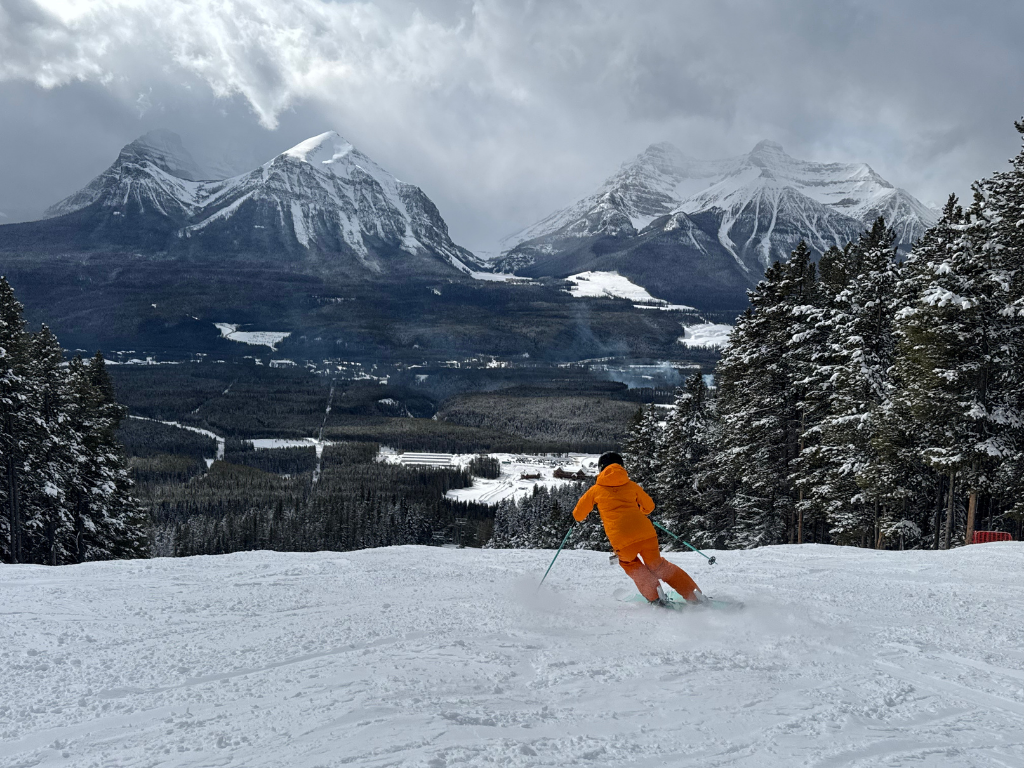
You won't get that angulation without mobility through the external rotators of the hips. That's exactly why we built edge angle mobility sessions into Powder Prep, and why they show up from week one rather than as a warm-up afterthought.
Mobility needs to be a priority not just in ski preparation, but as maintenance throughout the whole season.
Two: Muscular Endurance
This is home for most skiers. In any given ski day you're doing thousands of eccentric muscle contractions through the quads and hamstrings. Every turn, every compression you absorb, every bump you go over is lengthening your quads under load, over and over, all day long.
There's a study out of Austria that makes this concrete. Researchers took twenty-four fit recreational skiers, tested their leg strength on an isokinetic machine, sent them out for a four hour ski day, and tested them again afterward.
Peer-reviewed research
What a 4-hour ski day does to your legs
1 day before
Baseline
1 hour after
Eccentric strength reduced
24 hours after
Still reduced
24 recreational skiers, three isokinetic tests, one 4-hour ski session. Concentric strength showed no significant change. Only the eccentric dropped. Koller A, Fuchs B, Leichtfried V, Schobersberger W. BMJ Open Sport & Exercise Medicine, 2015;1(1).
Two things in there are worth sitting with. The first is that the drop was still measurable a full day later. The second is that only the eccentric side dropped. Concentric strength was unchanged. That's the fatigue resistance argument, measured directly.
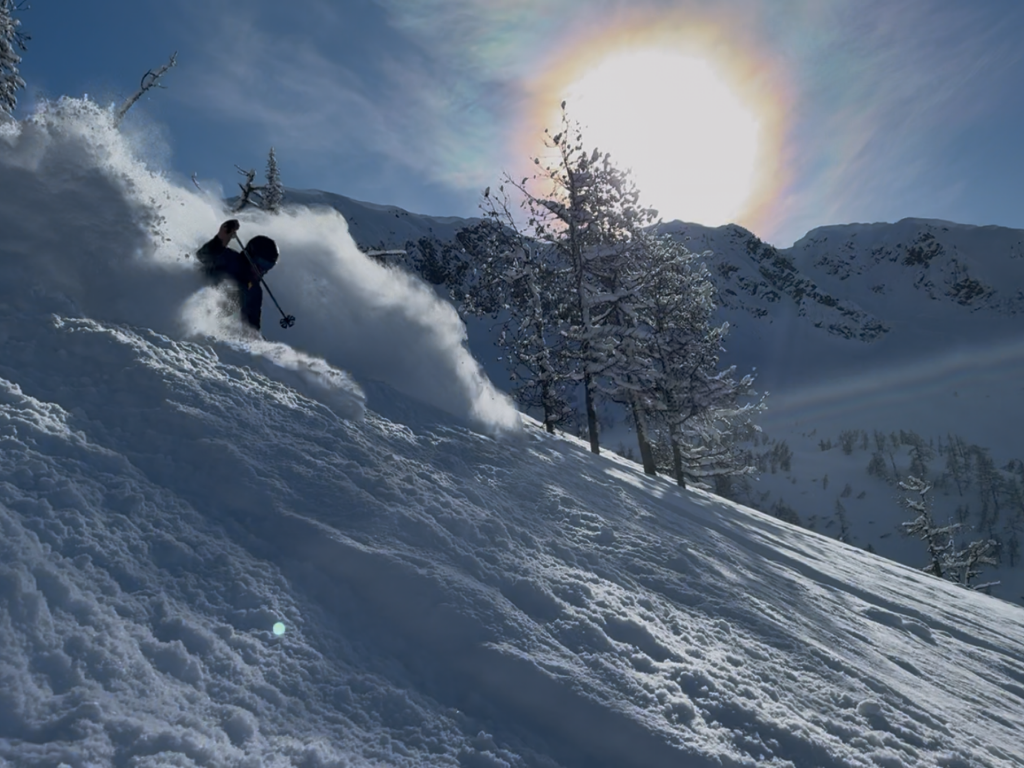
Everybody has a story about the last run of the day. It isn't bad luck. You can rewrite that story by training to resist fatigue, which is exactly what we do in the Greens and Blues phases: repetition, a 2:0:2 tempo, two seconds down and two seconds back up, working close to muscular fatigue so you can ski with confidence late in the day.
Three: Heavy Slow Resistance
This is the block we're most excited about, and it's new in Powder Prep this season. Our updated Black Diamond phase is built around heavy slow resistance.
Which is why we use a 3-0-3 tempo. Three seconds down, no pause, three seconds back up. Six seconds of load on every single rep, and it's a lot harder than it sounds.
This isn't a theory we invented. There's a randomized trial on athletes with patellar tendon pain that split them into three groups: one got a cortisone injection, one did eccentric decline squats, and one did heavy slow resistance for twelve weeks.
At the six month mark, the cortisone group had relapsed. Both loading groups held, and the heavy slow resistance group was the most satisfied with their results.
The detail we love most is buried in the methods. The protocol those researchers used asked subjects to spend three seconds on each of the eccentric and concentric phases, six seconds per repetition. That's the same tempo we program.
A follow-up study took actual tendon biopsies before and after twelve weeks of the same training.
Follow-up study · tendon biopsies
What 12 weeks did to the tendon
8 patients, 12 weeks of heavy slow resistance. Density P=.02, area P=.04. Kongsgaard M, Qvortrup K, Larsen J, et al. American Journal of Sports Medicine, 2010;38(4):749–756.
That's structural change inside the tendon, not just less pain.
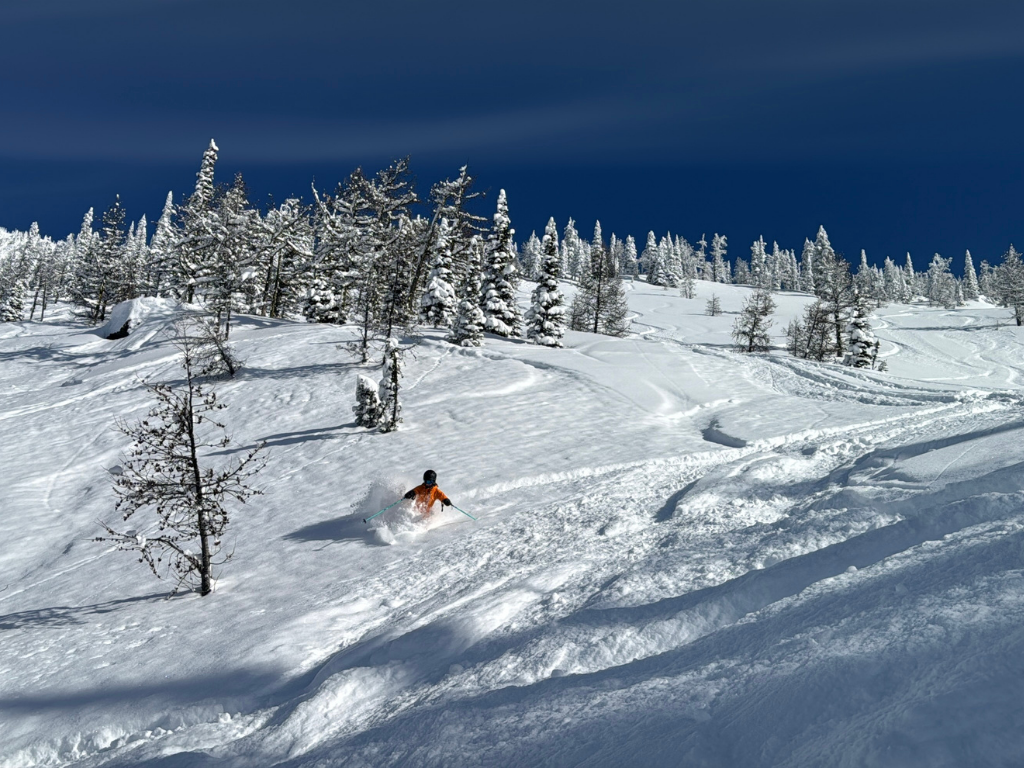
One honest caveat. Those protocols ran twelve weeks, because collagen turnover is slow. Our Blacks phase is four. It sits at weeks nine through twelve as the concentrated peak of slow tempo work that starts back in week one, and it only works because of everything underneath it.
You can't start here. You need a solid base, a summer of consistent training, and a body that already feels stable. Then we start layering on load.
The Black Diamond Phase
Three heavy ski-focused sessions a week at a 3-0-3 tempo, built on the same protocol used in the research. It sits at weeks nine through twelve, and everything before it is what makes it work.
See The Program 166 Sessions · 28 Weeks · 8 PhasesFour: Agility & Balance
Strength is not everything when it comes to skiing. It's also balance, agility, and proprioception.
There's a study we really like on this. Researchers followed a hundred and seventeen recreational skiers across an entire season at two different resorts. Before the season they tested agility, balance, and leg endurance, then tracked who got hurt.
Peer-reviewed research
What actually predicted injury
117 recreational skiers, two alpine resorts, one full season. Binary logistic regression, p < 0.05. Wang Z, Cai Y, Wu J, Xie S, Jiao W. Int J Environ Res Public Health, 2022;19(16):10430.
That doesn't mean endurance doesn't matter. Endurance is still what lets you ski all day and on consecutive days. But agility and balance are the pieces that show up in injury prevention, and in your ability to respond to changing snow conditions and terrain.
It's worth noting these skiers were tested rested, in a gym, before the season started. Nobody gets hurt under those conditions. People get hurt at three in the afternoon on day two of a storm cycle, which is where endurance and agility stop being separate problems.
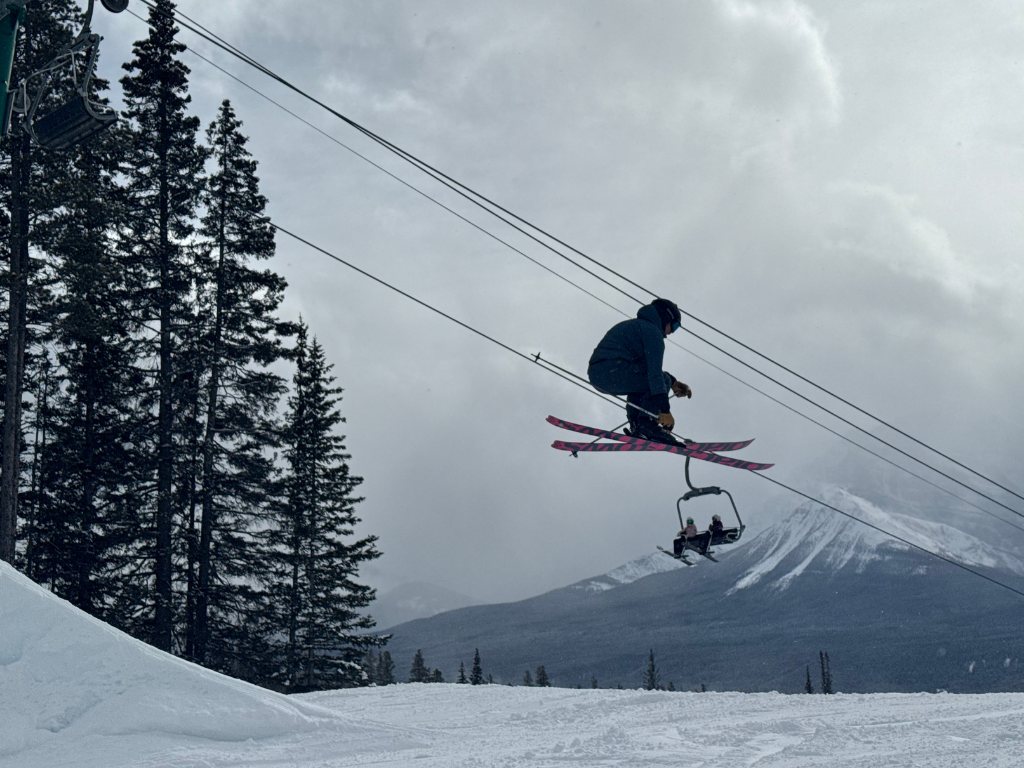
All of this lives in our Double Black Diamond phase, the power phase. Plyometrics, hopping in different directions, absorbing and reacting to external forces while maintaining good body alignment, which is more or less the definition of agility. We also use ladders and footwork drills to build speed and quickness, so you can carry that into tighter trees and terrain that demands quicker turns.
Five: The Aerobic Engine
All the strength work aside, aerobic capacity still matters a lot. Most resort skiing happens at higher altitude and can mean a long day on the mountain, which is exactly where your aerobic fitness comes into play.
Is cardiovascular training on its own going to let you ski more this season? Probably not. But it might very well help you ski later into life.
That's why we program two to three cardio days a week with intentional zone training, all season long. If you want to go deeper on how to structure that, our heart rate zones breakdown covers all five zones and the max-heart-rate formula most watches get wrong.
Six: Recovery
This last one matters most during the season, and it's the piece that ties directly back to El Niño. A big year means huge dumps that last multiple days. You want to be able to get back out there day after day and keep skiing, not call it quits because your body can't keep up.
Remember those recreational skiers who still had diminished strength twenty-four hours later? That's the problem. On day two of a storm cycle you have less protection around the knee, deeper snow than yesterday, and more confidence than yesterday. That combination is how people get hurt on the best days of the year.
Before you ski: active stretching, maybe some tissue work, making sure you're limber and warmed up before you get on the hill.
After you ski: a little post-ski stretching and some foam rolling to help tissue recover. The evidence here is modest but consistent. A review of twenty-one studies found rolling after exercise reduced perceived soreness by about six percent and blunted the drop in strength and sprint performance by three to four percent. It won't erase fatigue, but it takes the edge off.
All day: stay hydrated and stay fueled on the mountain. It's so often overlooked, and it's free.
The Order Matters
Here's the part people get wrong. It isn't just what you train, it's the sequence. We focus on stability first, then build muscular endurance, then really load those tissues to build strength, and then unleash all of that into power and explosive, reactive training right before the season starts.
How the program stacks
Build up, then ski down
Each ramp is steeper than the one before it. You earn the next phase by finishing the one under it, and everything you build gets spent on the far side.
Run heavy slow loading and high-velocity plyometrics in the same week and you get a recovery collision. Stiffen the spring first, then go use it. That's why the phases look like this.
Weeks 1–4
Greens
Stabilization & Movement Quality
Neuromuscular patterning, corrective work, and joint stability from the ground up. Mobility is introduced here, and cardio starts with Zone 2 base building. This phase primes the body for everything ahead of it.
Weeks 5–8
Blues
Strength Endurance
Load enters the program. Built on the foundation from Greens, the tempo becomes more dynamic and the sets get long. This is the bridge from stable to capable, and where the muscular endurance for long days gets built.
Weeks 9–12
Blacks
Heavy Slow Resistance
The newest phase in Powder Prep. Three heavy ski-focused resistance sessions a week, loaded slowly and deliberately at a 3-0-3 tempo. Cardio volume increases as strength frequency comes down. The hardest work of the build lives here.
Weeks 13–16
Double Blacks
Power & On-Snow Agility
Explosive, multi-planar work to sharpen reaction time and agility. Strength stays at three sessions to protect room for skiing and cardio. Everything you've built now gets expressed as power.
Week 17
De-Load
Recalibration & Recovery
A scheduled reset. Lighter activity that maintains the base while lowering joint and muscle stress. Recovery isn't bonus time off. It's part of how the body absorbs the work.
Weeks 18–21
Storm Cycle 01
Early-Season Maintenance
The weekly calendar shifts here. You're on snow now, so the gym work reorganizes around the mountain instead of competing with it. All new routines you haven't seen in the build phases.
Week 22
De-Load
Recalibration & Recovery
A second scheduled reset, mid-season. Enhance circulation, aid recovery, and keep things flowing so the body can absorb what the early season asked of it.
Weeks 23–28
Storm Cycle 02
Deep-Season Maintenance
Six weeks, the longest block in the program. You're deep in the season and the mountain is carrying most of the training stress. This block maintains what the previous twenty-two weeks built.
Where To Start
If the season hasn't started yet
- Ankle and hip mobility, three or more times per week, starting today
- Build a stability base before you add load
- Two to three zone-based cardio days per week
- Tempo strength work at 2:0:2 before you go heavy
Once you have a base
- Heavy slow resistance at a 3-0-3 tempo, three sessions per week
- Keep mobility running alongside it, not instead of it
- Don't add plyometrics in the same block as your heavy slow work
Right before the season
- Multi-planar plyometrics and reactive work
- Ladder and footwork drills for quickness
- Practice your pre-ski warm-up so it's a habit before day one
During a storm cycle
- Warm up before you get on the hill, every day
- Post-ski stretching and rolling
- Fuel and hydrate on the mountain, not just at the car
- Treat day three as a lighter day on purpose
Common Questions
How long before the season should I start training?
Sixteen weeks gets you through a full build. Start now and you'll be in the heavy strength block right around when your hill opens, and hitting the power phase when the first big storm cycles roll through. Less time than that still helps, you just prioritize differently: mobility and stability first, always.
What is heavy slow resistance training?
Strength work performed with a deliberately slow tempo, typically three seconds down and three seconds up, so every repetition puts six seconds of load through the tissue. Muscle responds to load, tendon responds to time under tension, and fast reps can't deliver the second one.
Does El Niño mean my mountain will get more snow?
Nobody knows. Historically the storm track shifts south, which favors California, the Southwest, and the southern Rockies, while the Pacific Northwest leans warmer. But the last Super El Niño didn't land where anyone predicted, and strength of the event doesn't improve the accuracy of its location.
Do I need a gym for this?
For the mobility, stability, and plyometric work, no. For the heavy slow resistance phase, you need meaningful load, so some access to weight helps. The rest of the program is built to work with what most people actually have.
Is heavier, wetter snow really harder to ski?
Yes. Denser snow takes more force to turn in, which means more eccentric demand per turn. It's one of the few genuinely training-relevant consequences of a strong El Niño.
Train With OAT
Nobody has any idea what this winter's El Niño will bring. Forecasts are just probability. But you have the decision to show up prepared or not, and regardless of how close the season is getting, you still have time.
Powder Prep
166 sessions. 28 weeks. 8 structured phases. Built for resort days, hut trips, powder days, groomers, bumps and steeps, and every day in between.
Start Free Trial 1:1 Coach Messaging · 7 Days Free · Starts Every MondayA little bit of intentional work really will enhance your experiences on the mountain this season. That's what we're all about here at OAT.
See you out there.