
Net Gain
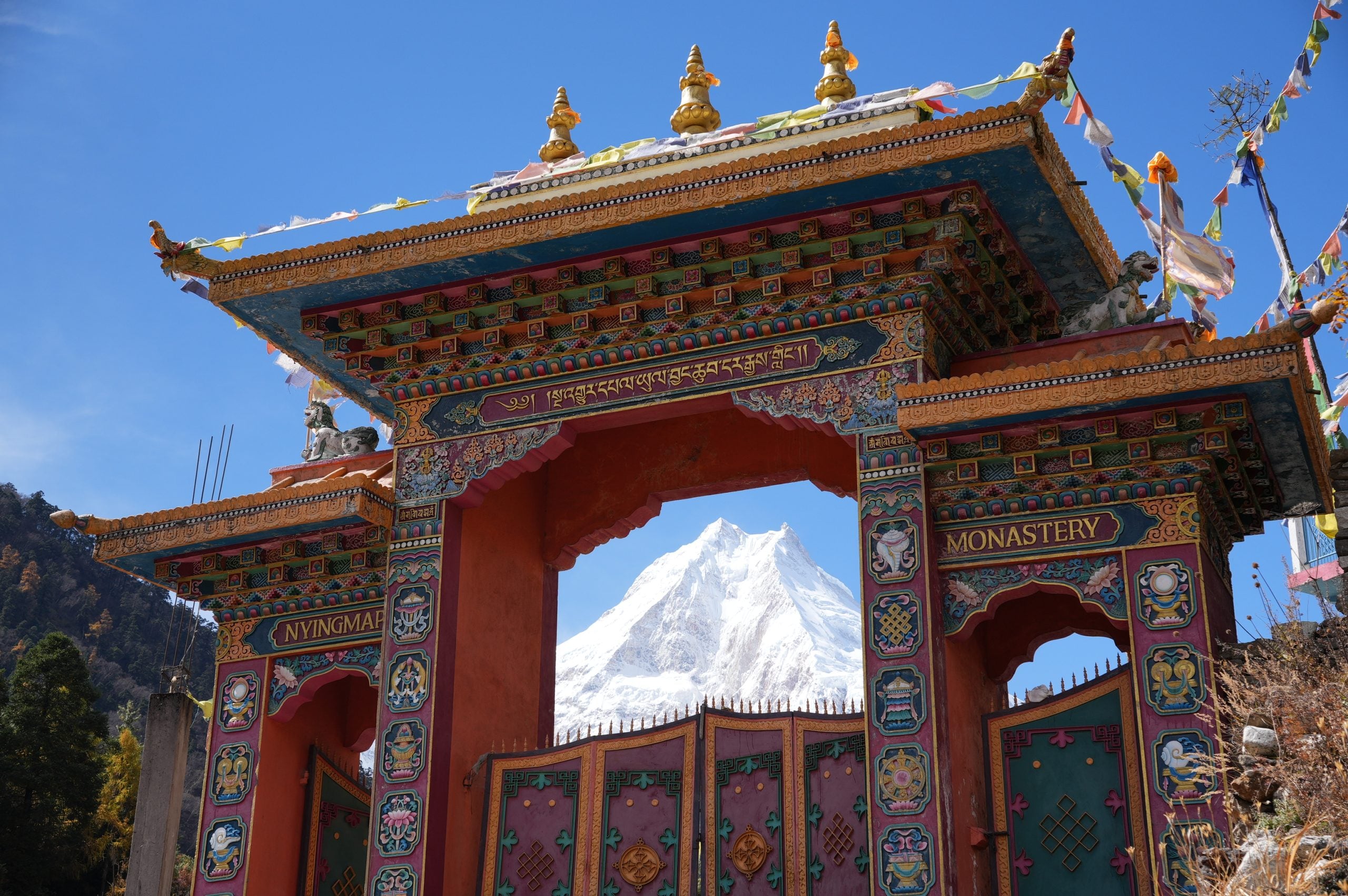
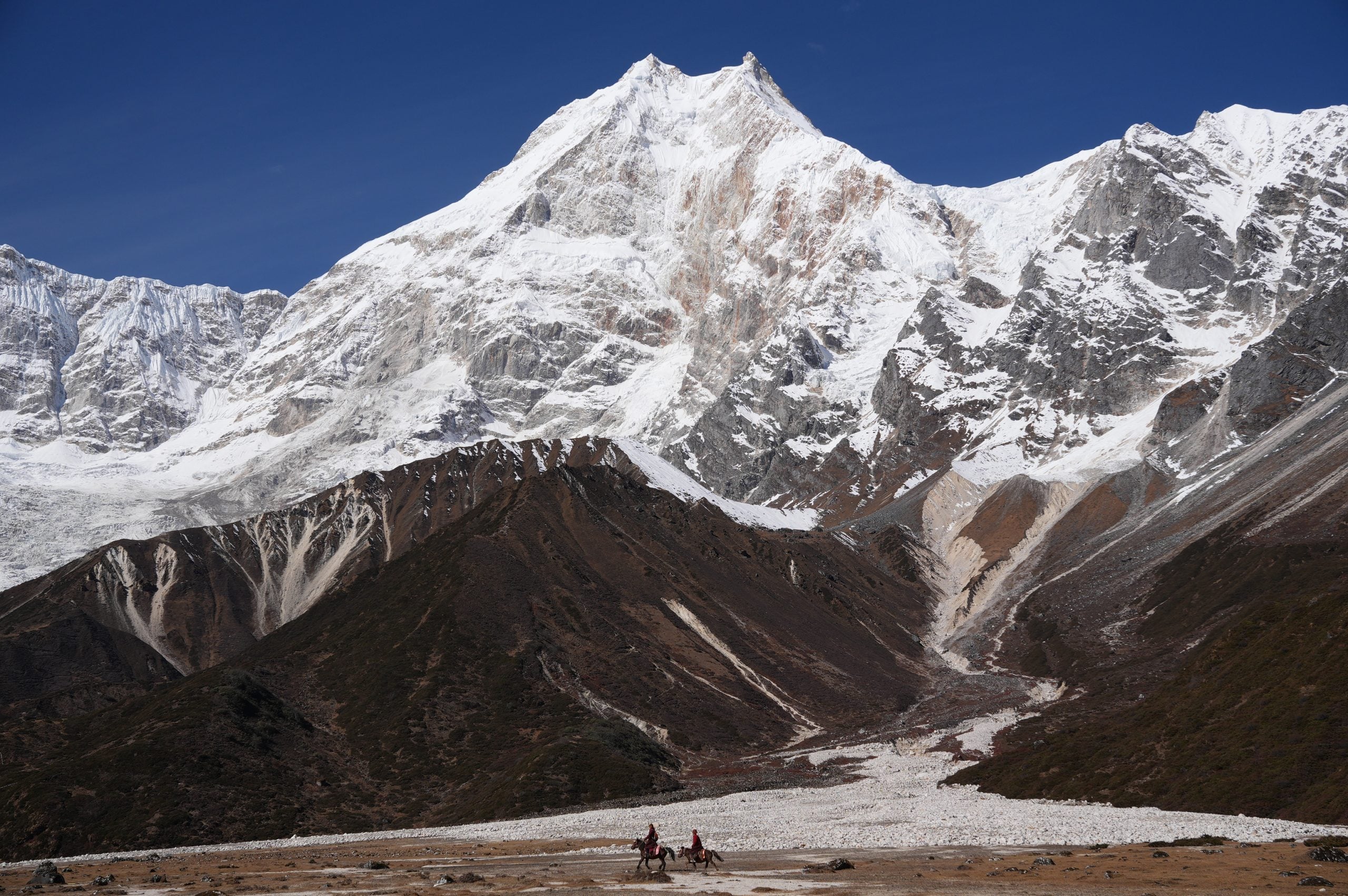
As we rounded the corner, it finally came into view. The unmistakable twin-horned summit scraped the fiercely blue sky at 8,163 meters. Manaslu, the eighth-tallest mountain on the planet, finally revealed itself after four days of marching through flood debris, over massive swinging bridges, and through countless climbs, descents, and creek crossings.
A jeep dropped us off at the end of the road in the rural village of Machha Khola. The eight-hour ride from Kathmandu left us with stiff necks and sore hands from gripping the "oh shit" bar every time our driver nearly missed an oncoming bus, cow, or pedestrian. Due to recent flooding, the alternative driving route was more dirt than pavement, bouncing us around for a true "Nepali massage." Despite only stopping for two short breaks, I was shocked to see that my watch had tracked over 8,000 steps from the sheer jostling of the long, bumpy ride. We unloaded our duffels, met our porters, and settled in for a night at 823 m, only about 500 feet higher than our home in Ashland, Oregon.
On October 25, we finally laced up our trail shoes and began walking toward Manaslu Base Camp, Larke Pass, and, hopefully, Larke Peak. We were immediately taken aback by the sheer magnitude of destruction from the recent flood on the Budhi Gandaki. The route had officially reopened only two days prior, and the aftermath was fresh, raw, and jarring. For the next two days, we slogged up the low-altitude drainage, trying to fathom what it must have been like to see a massive wall of glacial sludge roar down the canyon.
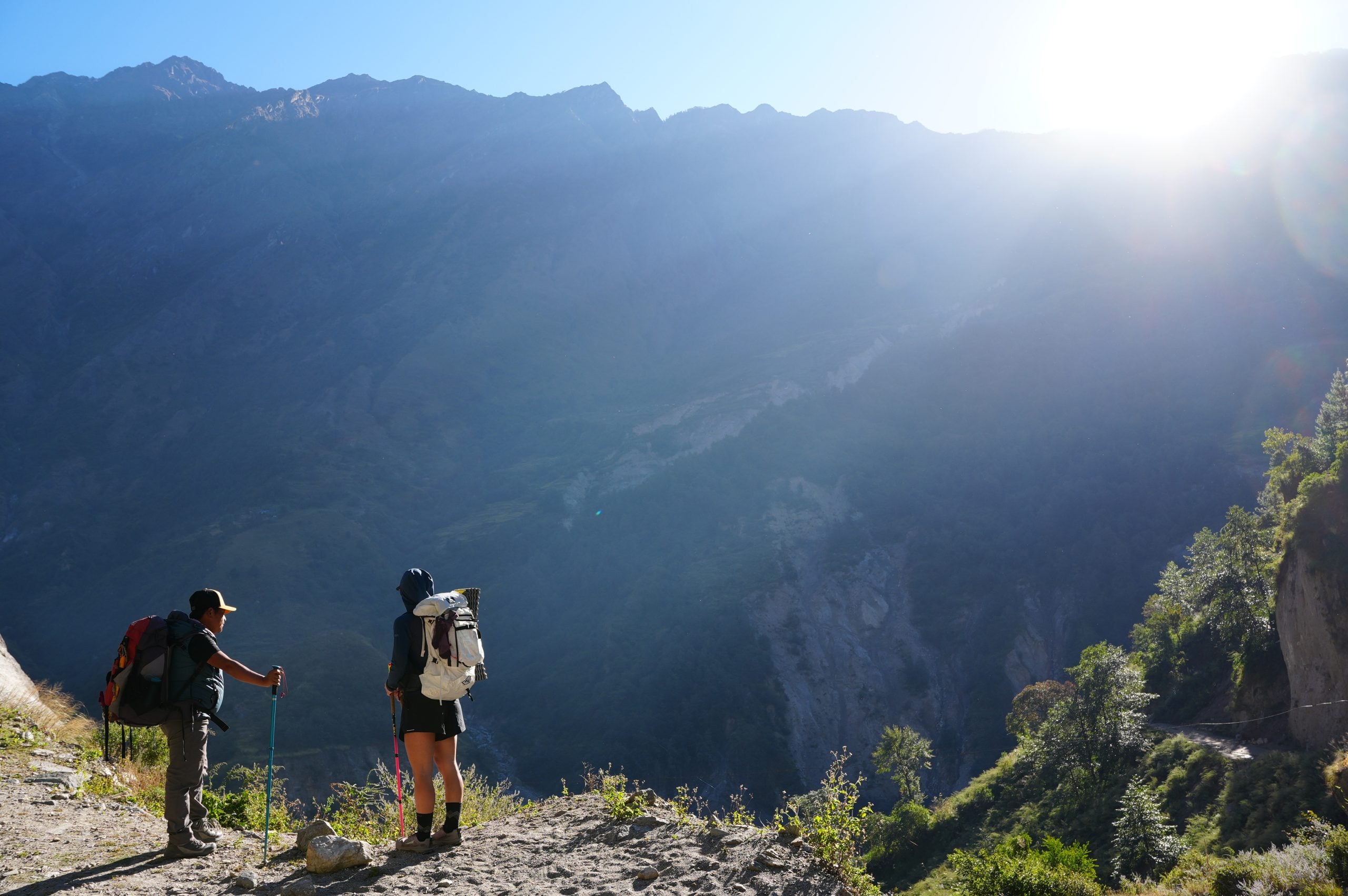
Motorbikes plastered into the mud, houses stripped entirely from their foundations, and excavators working to rebuild the rural roads connecting villages became a common sight. Despite the devastation, in classic Nepali style, we were greeted with smiles, friendly "Namastes," and bottomless dal bhat from locals and visitors alike.
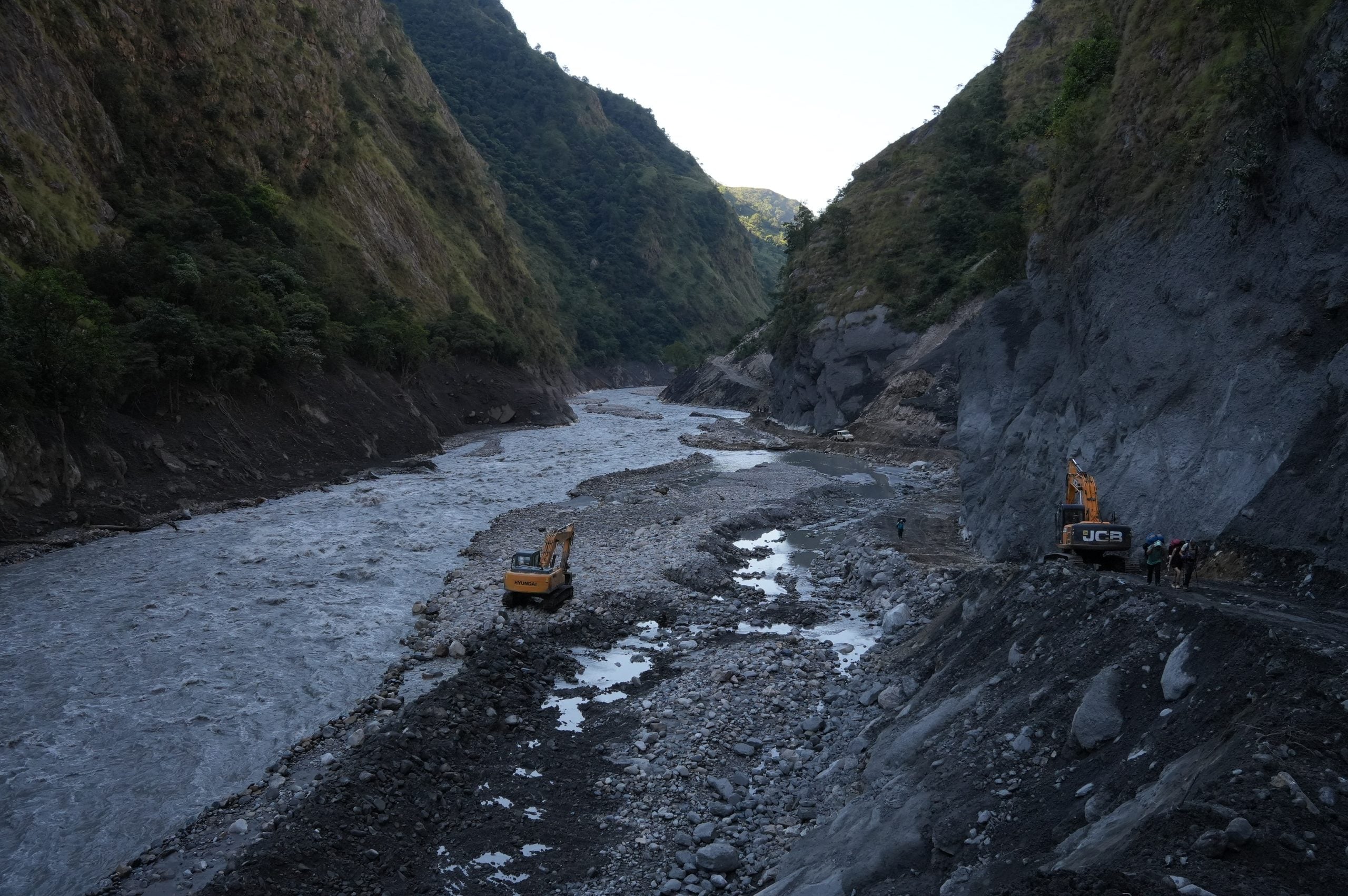
Our first four days on the Manaslu Circuit were humbling. In 2022, I completed the Everest Base Camp trek with Gokyo Lakes with my dad. My memories of that well-polished and relatively simple trail had skewed my expectations of the Manaslu Circuit. The Everest region sees roughly three times as many trekkers: in 2025, Sagarmatha National Park recorded 47,524 foreign visitors, while 14,720 trekkers took on Manaslu. Not to mention the Khumbu's decades-long head start on infrastructure. The airstrip at Lukla was built in 1964, while Manaslu only opened to foreign trekkers in 1991. Furthermore, it is far simpler to shuttle provisions into the Khumbu by air through Lukla, whereas on Manaslu, a treacherous eight-hour drive and a long, long walk are required for every last material.
With its remoteness come unique challenges that you may not experience in the Khumbu. Western toilets are few and far between, hot showers are an illusion of the mind, internet access is limited, and in general there are fewer luxuries and amenities. But what it lacks in comfort, it makes up for in empty trails, stellar views, and a truly perfect acclimatization profile, gaining about 670 meters (2,200 feet) each day.
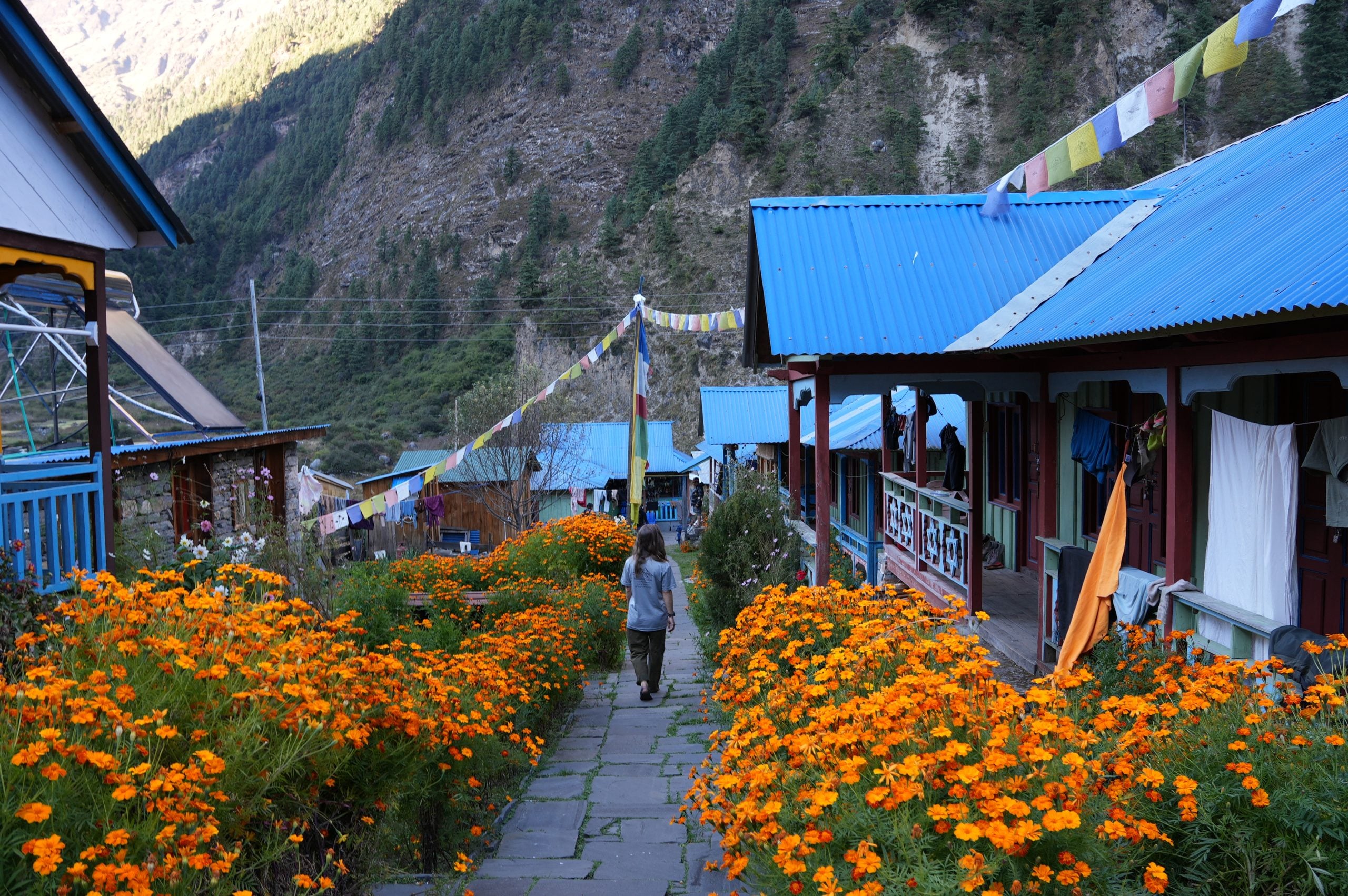
The net altitude change at the end of each day, however, did not reflect the elevation profile of our daily efforts. Over the first four days, we covered over 42 miles (68 km) with 21,558 feet (6,571 m) of total elevation change, despite a net gain of only 2,677 meters (8,783 feet) from Machha Khola to Shyala. We logged 24 hours on our feet. Our packs were nowhere near as heavy as the bone-crushing loads our porters carried, including our mountaineering gear and base camp setup for Larke Peak, but we were still carrying between 18 and 25 pounds of food, water, layers, and as much as we could fit into our 40-liter Hyperlite packs.
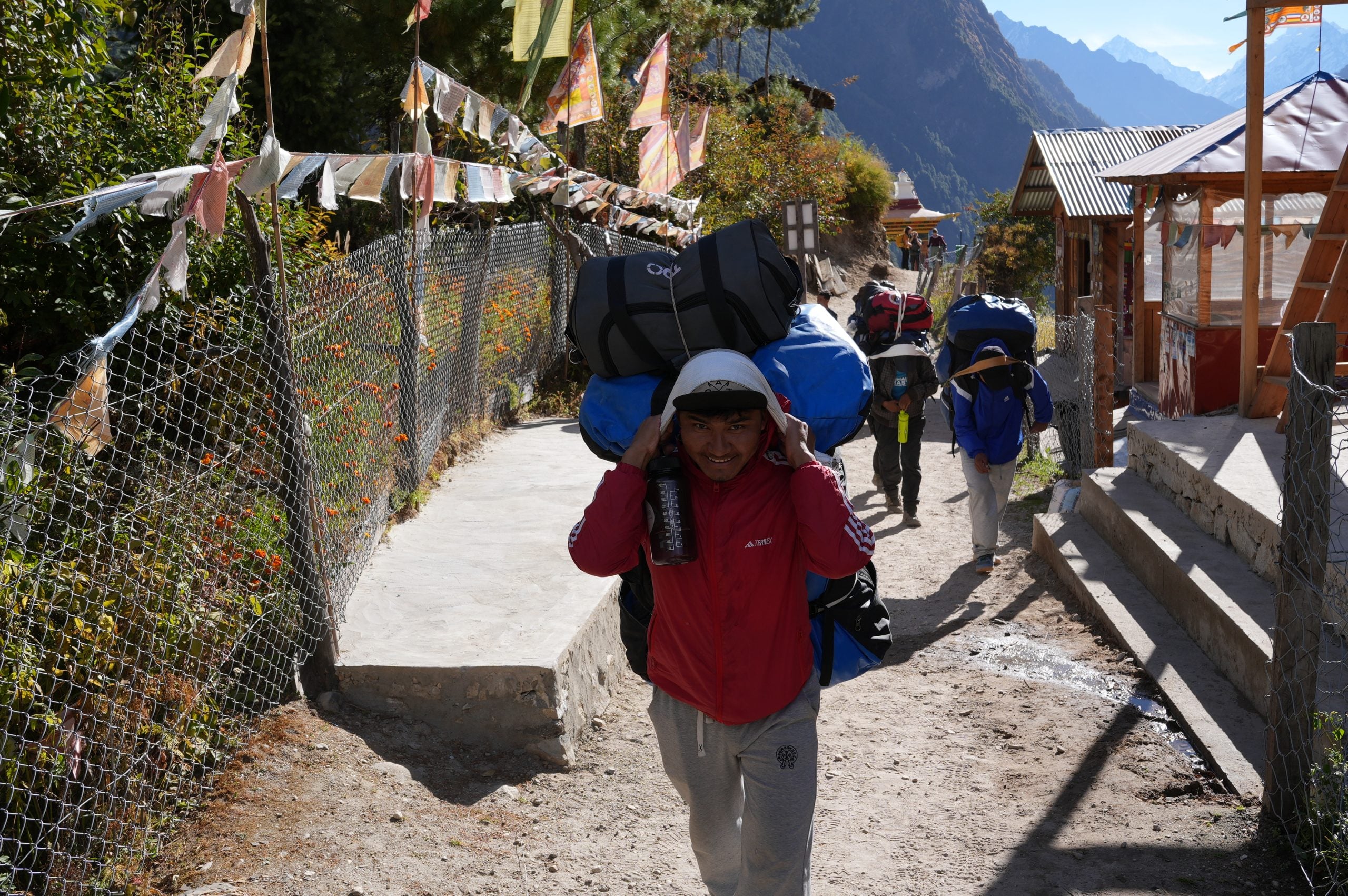
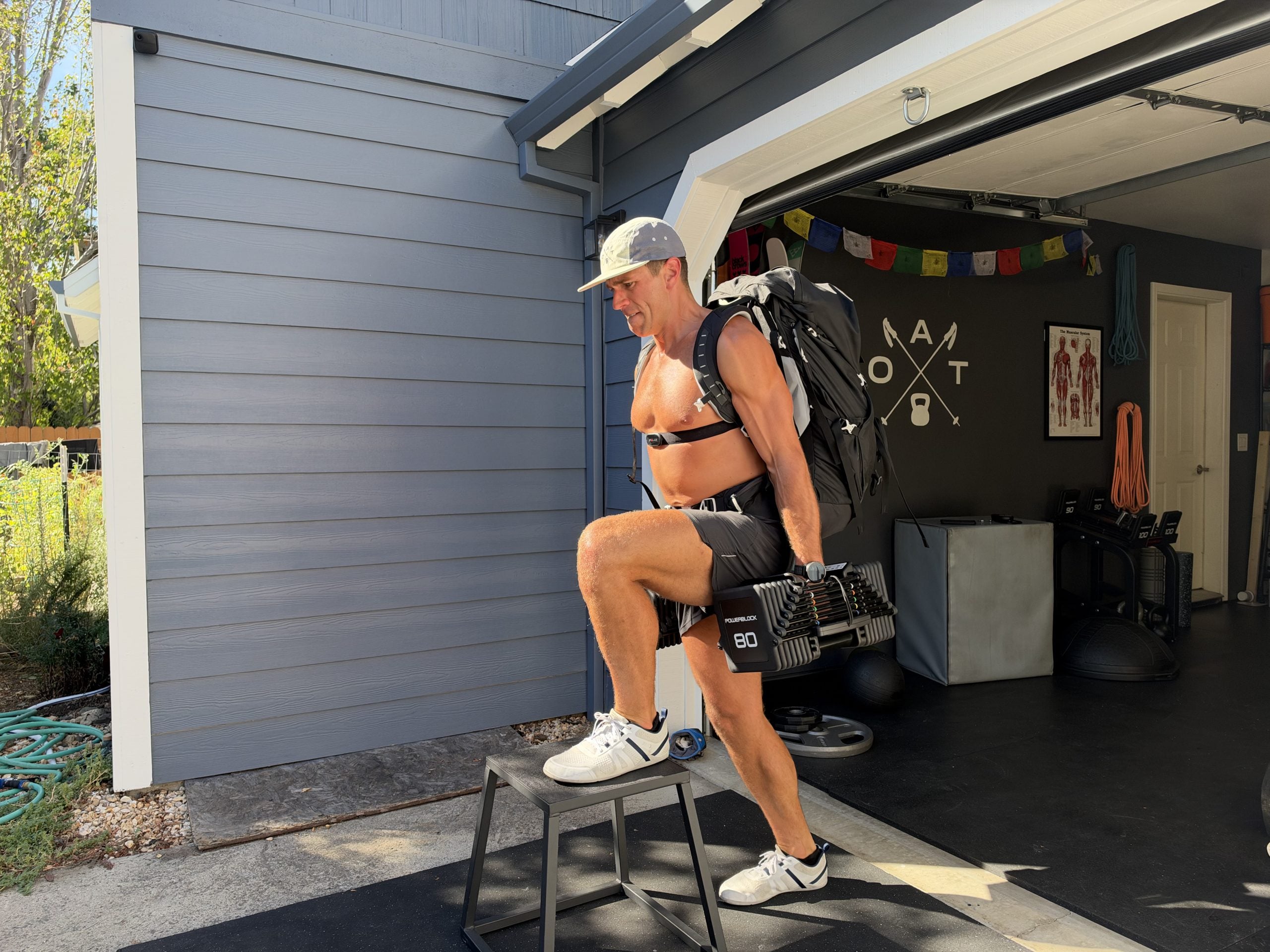
All of this to say, by day four, we were certainly feeling the fatigue. We reflected on how grateful we were for the Maximal Strength Phase we completed the month before departure. These were grueling, tedious workouts with low reps, high loads, and a select few exercises that replicate the demands of trekking and mountaineering. This three-week phase helped us pack on some mass ahead of the inevitable atrophy that comes with high exertion at altitude.
And the fatigue isn't just physical. Moving over technical terrain and being mindful of every step requires quite a bit of mental engagement, which inevitably results in greater physical expenditure. This is compounded by the daily chores of unpacking, repacking, and adapting to a foreign culture. Not knowing where you'll sleep each night, or exactly what the day might hold, puts more stress on the body than one often notices.
Hydration and fueling were at the forefront of our minds during these high-output days. Despite the tallest mountain range in the world looming right above us, the river canyon trails were scorching hot under a subtropical sun at about the same latitude as Houston, Texas. We carried 3 liters of water, sterilized with our SteriPen UV purifier and mixed with electrolytes. Lunch breaks at teahouses allowed us to camel up with a liter of ginger lemon honey tea and multiple helpings of dal bhat to power us through the second half of the day.
Since we're both plant-based, our goal was to stay as true to our regular eating habits as possible while remaining flexible with the resources available. In Kathmandu, it was still the tail end of Dashain, Nepal's 15-day festival celebrating the goddess Durga's victory over the demon Mahishasura. Most restaurants were operating on limited menus, and for breakfast we did eat eggs, as there were truly no other options.
On the trail, however, we've had no issue maintaining a fully vegan diet. For breakfast, we eat champa porridge, a local staple made from roasted flour (usually barley) and water, which we fortify with Spacemilk, a yeast-based protein powder we brought from the States. We also bought a jar of peanut butter on day two, which added calories and protein to our morning routine.
Supplementation was an important part of our trip planning. We've stayed on top of our usual stack from home, including vitamin C, D3, K2, plant-based algae omega-3, creatine, and iron bisglycinate. Placebo or not, it has added some normalcy to a very abnormal environment.
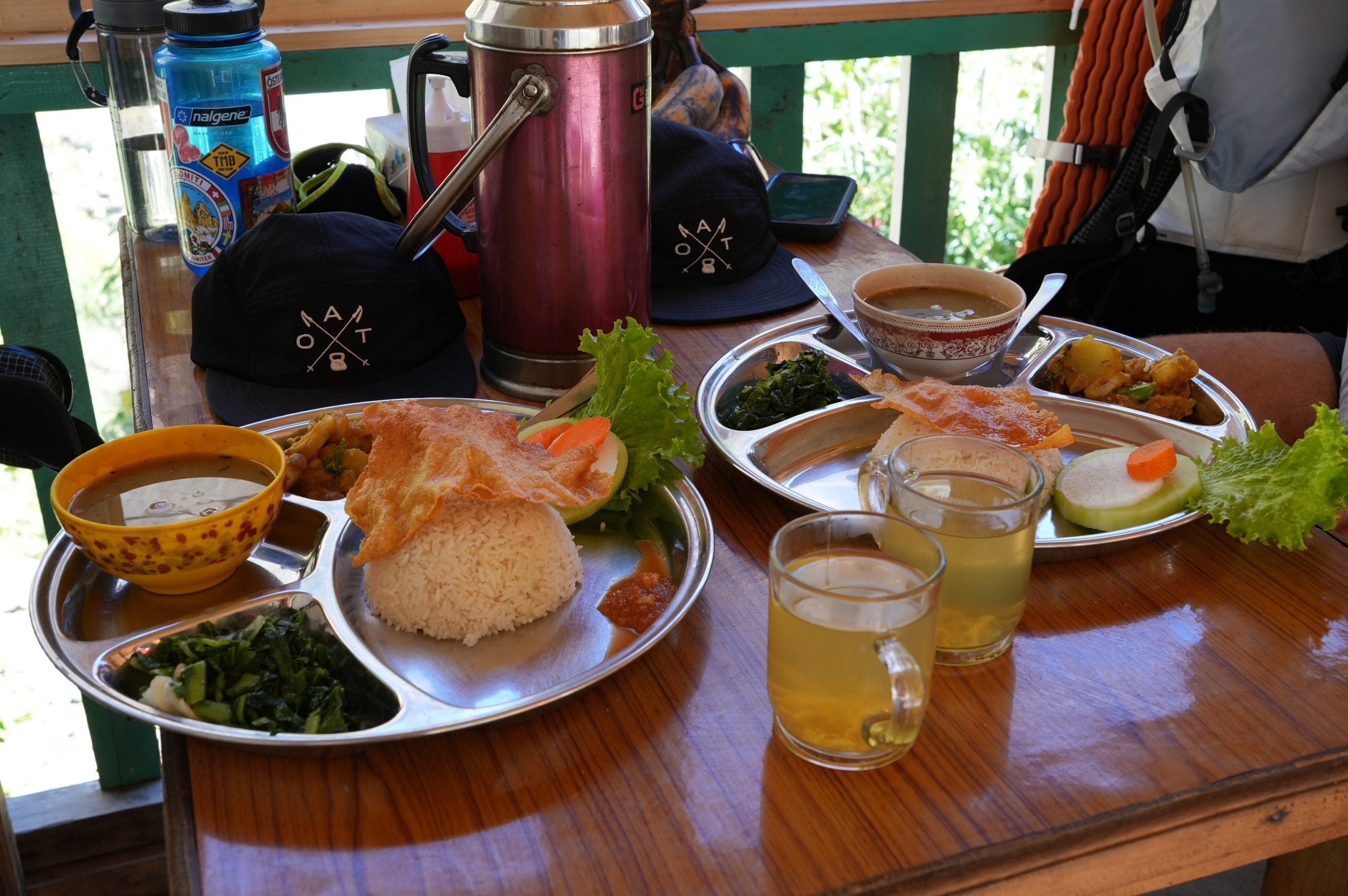
For lunch and dinner, we stuck exclusively to dal bhat: local rice, curried vegetables, freshly harvested local greens, and lentil soup. Dal bhat is the obvious choice for sheer calories and plant-based protein. On average, within seven minutes of us scarfing down our meals, our guide from Magical Nepal, Kishor, was back with more rice, dal, and veg. Despite our gestures and shouts of "STOP STOP STOP!!", his heavy hand always seemed to transfer a second full plate of dal bhat onto ours. More often than not, this resulted in a slow waddle up a steep set of stairs in the early afternoon. Emily and I joked that this was just another long "fart walk."
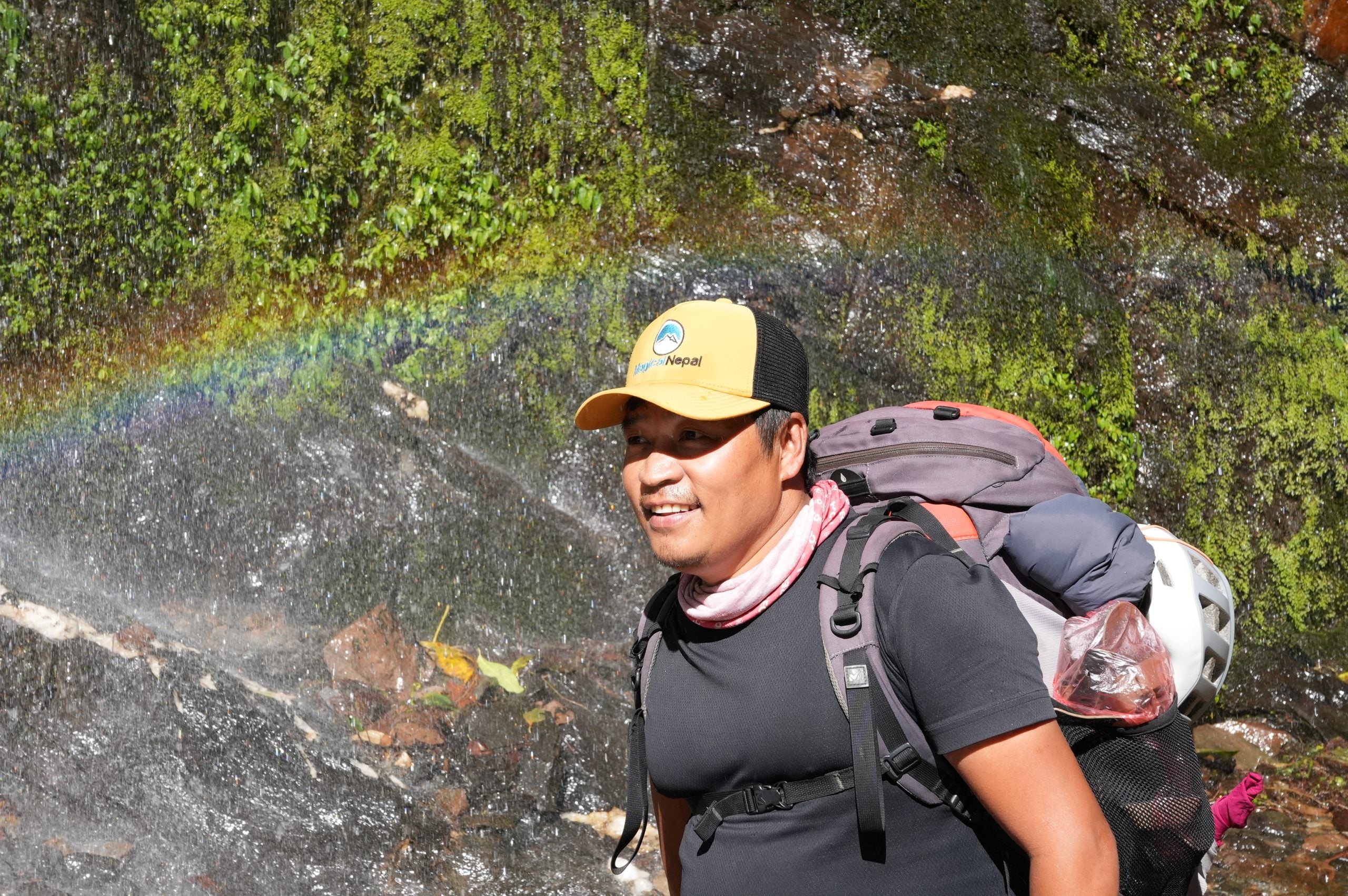
Despite the slow "Nepali pace," we generally managed to arrive at the next village between 2 and 3 p.m. That left ample time and bandwidth to wash our dust-covered clothes, take an icy cold shower, and even film a mobility routine for our upcoming Manaslu Mobility Series, all before another wonderful round of bottomless dal bhat.
As daylight waned and the sun dipped below the steep canyon walls, we watched other groups of trekkers stumble in, clearly exhausted from a challenging day on steep, technical trails. Arriving late to the next village is a tightening loop: you arrive later, self-care gets pushed to the back burner, you shower later, eat dinner later, go to sleep later, wake up later, and repeat the downward spiral the next day. On an adventure as demanding as trekking in the Himalayas, you are already compromised. Between shaking off residual jet lag, a gut microbiome adjusting to foreign foods, and exposure to countless novel stimuli, your nervous and immune systems are already in overdrive. The nervous system's downshift into rest and recovery is critical to staying healthy and composed on long expeditions. It's hard to articulate the value those precious hours hold.
As we often say, I wouldn't want to do this with any less fitness. Fitness affords you true enjoyment on the trail and the ability to maintain homeostasis. We were grateful for all the hours of training we squeezed in, despite an exceptionally heavy workload before our departure.
Follow the Expedition Live
We're in the Himalayas on the OAT Nepal Expedition. Follow along.
Follow the ExpeditionRolling into the village of Shyala at 3,500 m, we were blessed with crisp blue skies, warm sun, and a 360° view of sky-scraping mountains, including an intimate view of Manaslu. Getting back on Wi-Fi for the first time in four days allowed us to reconnect with our community, make sure our clients were set up to keep training for their upcoming objectives, and catch up with loved ones back home.
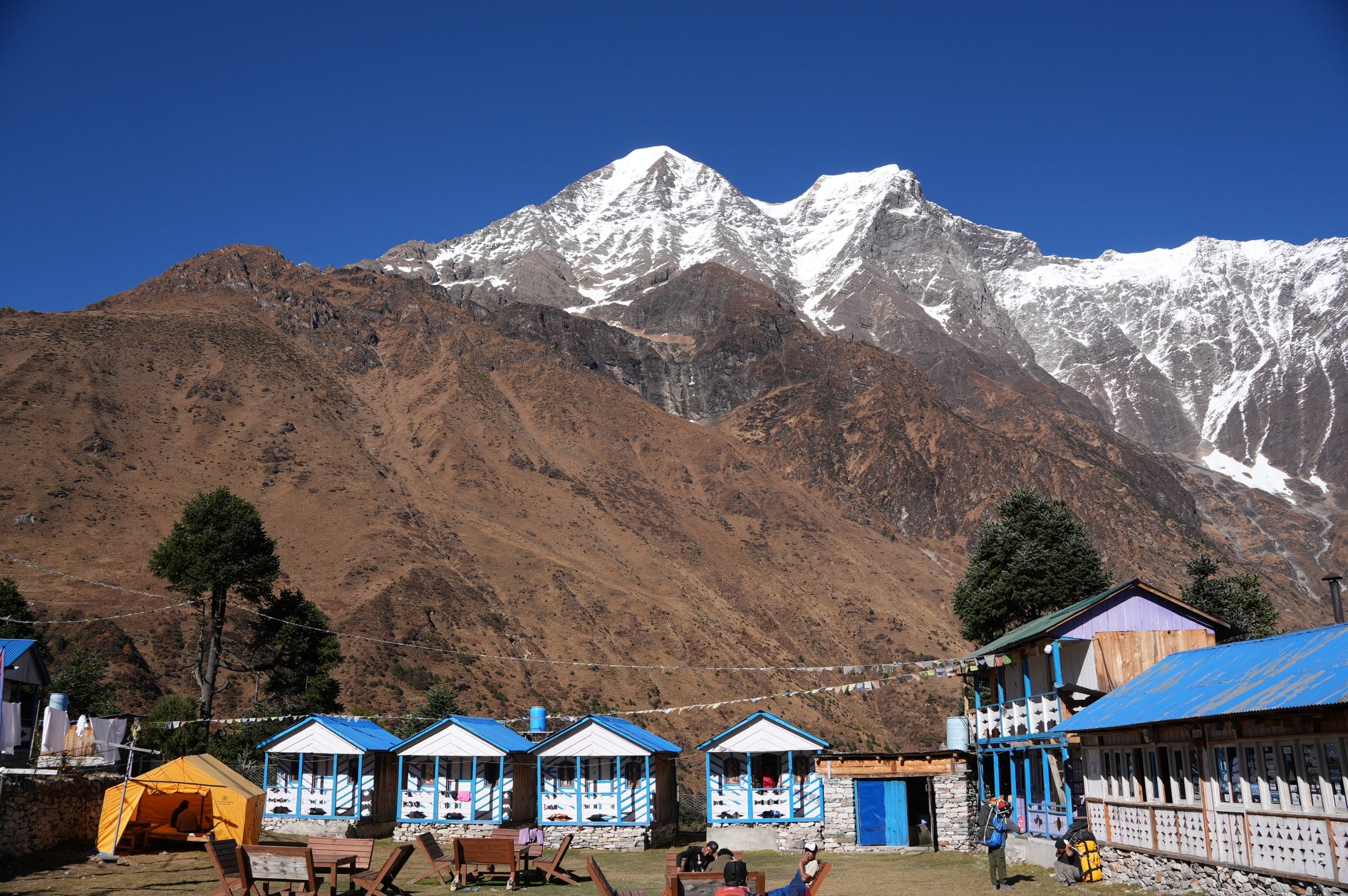
We saw posts from the Nepal Police and a weather alert from the U.S. Embassy in Nepal warning trekkers and mountaineers across much of the Himalayas, including Gandaki Province, where we were traveling. Cyclone Arnab, a storm system in the Bay of Bengal, was expected to bring heavy rain and mountain snow from October 29 to 31, with the risk of flooding, landslides, and avalanches. Trekkers already in the mountains were advised to "remain in a safe location," and Nepal's Department of Immigration stopped issuing restricted-area trekking permits for those three days.
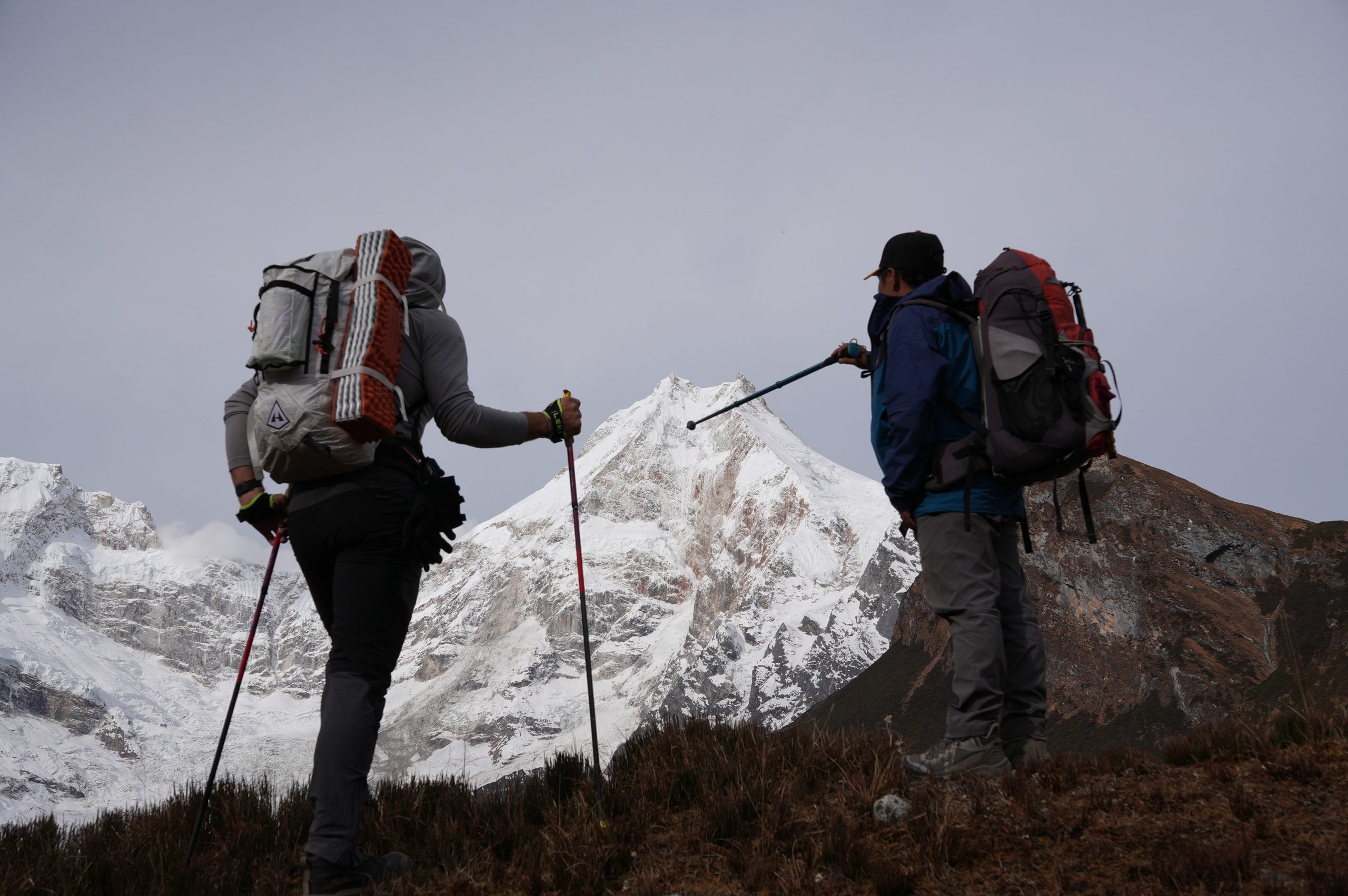
On the morning of the 29th, we awoke to a calm, clear, cold morning and departed for our first acclimatization hike to Pungyen Gompa, a roughly 400-year-old monastery at 4,040 m (13,255 ft). As the air got thinner, our breathing intensified, but we felt strong cruising across the vast plateau leading to the base of Manaslu, its summit towering more than 13,000 feet over our heads.
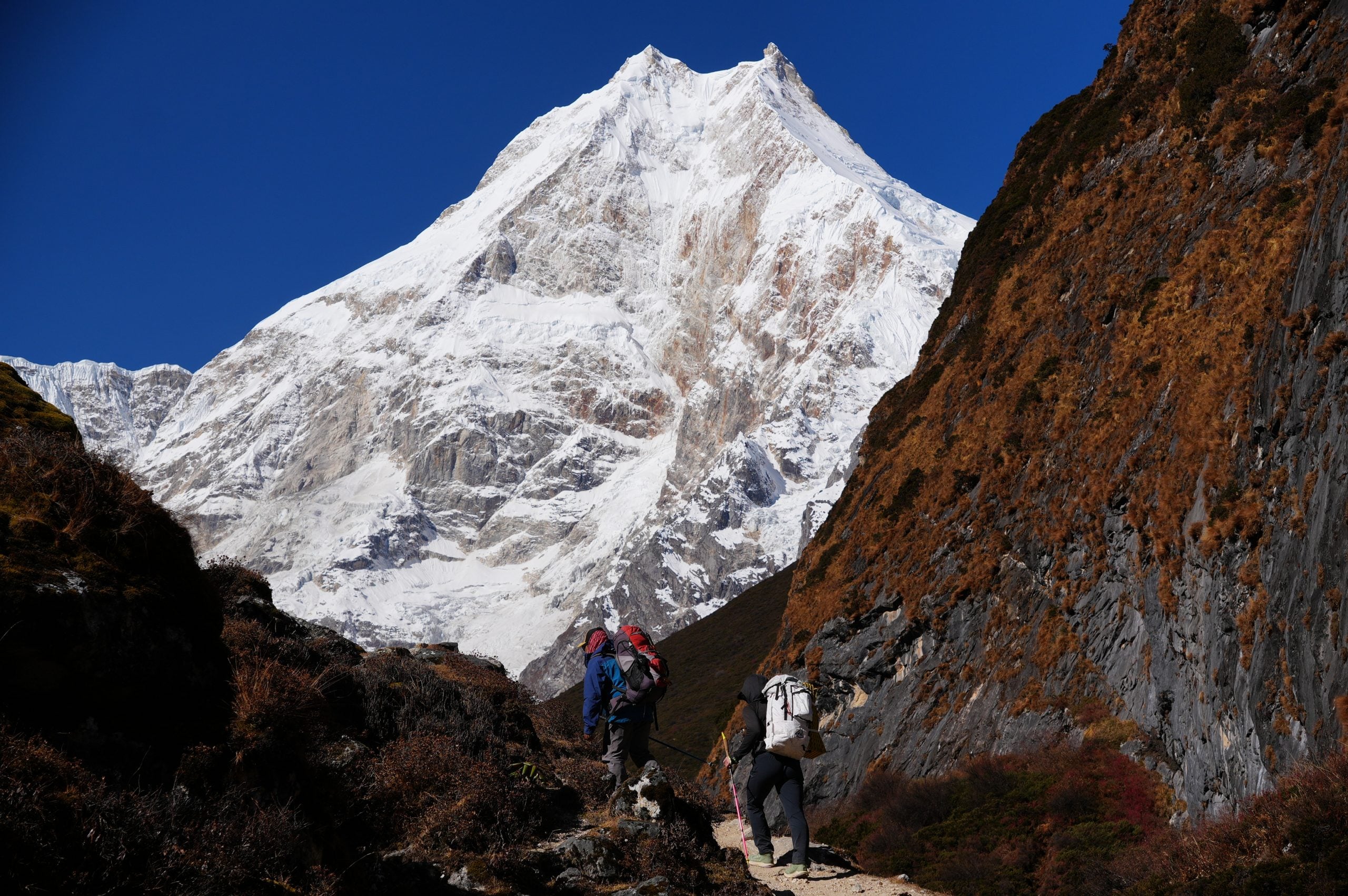
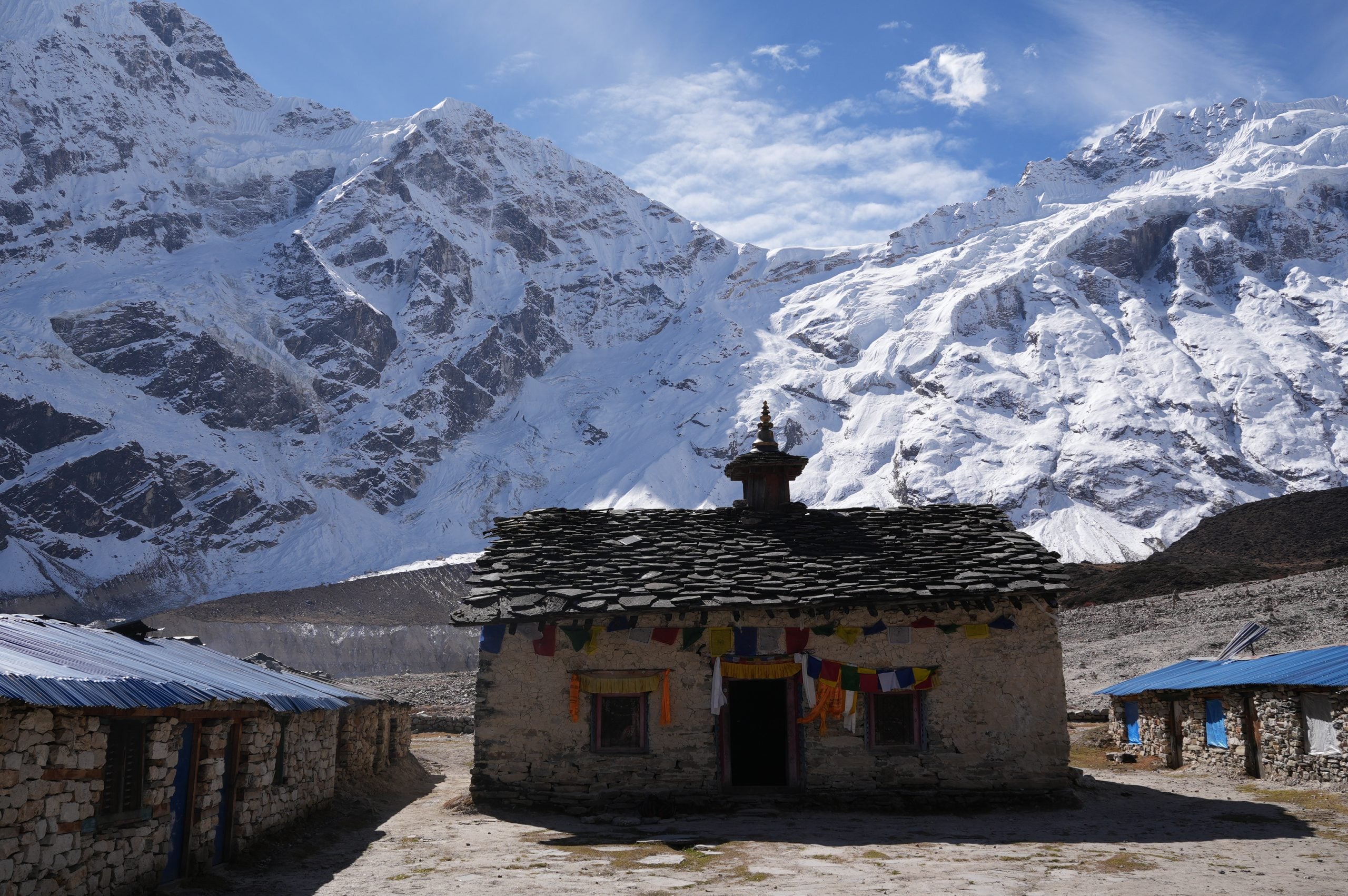
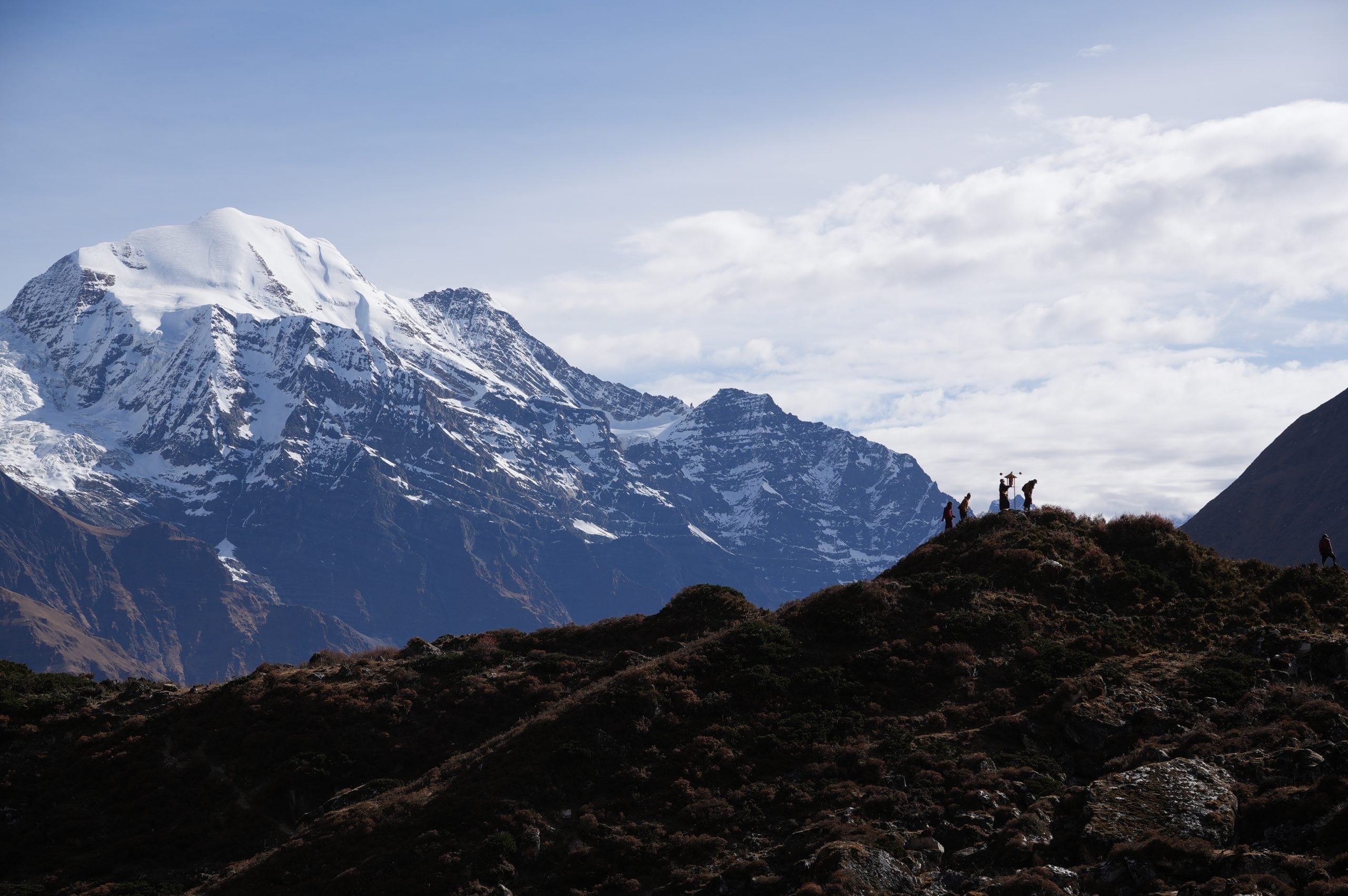
As we began our descent to the old village of Samagaun, the clouds chased us to our lodge for the evening. After our cold-shower routine, we walked to the outskirts of the village and found a small, dung-covered patch of dying grass to lay out our pads and stretch our tight hips after another five-hour day on the trail.
In the night, the pitter-patter of rain on the tin roof signaled that our Manaslu Base Camp acclimatization hike, scheduled for the next morning, was off the table. So here we are, hunkered down at the 888 Cafe, drinking our first real coffee in a week, waiting for the weather to break so we can continue our voyage into the unknown.
Follow Along From the Trail
We're in the Himalayas on the OAT Nepal Expedition. Follow along.
Follow the Expedition Live