Trail Etiquette 101

Trail Etiquette 101
The unwritten rules, written down.
With the arrival of Spring, hikers are coming out of hibernation and getting back on trail. After a long winter, sometimes the basic principles of how to be a courteous hiker seem to be forgotten in the froth of the first few miles. In this article we are going to review the basic rules of trail etiquette so everyone can have a safe, enjoyable time on every adventure.
This is not a lesson on Leave No Trace ethics, but if you've ever been frustrated by tissues and Clif bar wrappers on the ground, or someone playing music on their Bluetooth speaker, you'll be glad we touched on it! Here is a quick rundown of each principle and how it pertains to trail etiquette.
The 7 LNT Principles
-
1
Plan Ahead and Prepare You are doing so by simply reading this article! Understanding the basic principles of trail etiquette is your responsibility as a trail user.
-
2
Travel and Camp on Durable Surfaces This is a very important consideration when passing others on trail, or pulling over to let someone pass. Be mindful of where you are stepping off. On granite, it probably doesn't matter too much. But trails with wildflowers, delicate plants, or erosion-prone terrain should be treated with respect. Give plants a chance!
-
3
Dispose of Waste Properly Leaving your tissue on trail is unacceptable. And "it was an accident" is not a good excuse. If you pack it in, you pack it out. Period. Don't count on stuffing a wrapper in your pocket and hoping it doesn't fall out. It takes two seconds to open a zipper pocket and make sure it makes it off the trail with you. This is where dog poop enters the conversation. Magical as they are, their waste is still a foreign body to the natural world and must be removed. Don't leave your poop bag trailside and say "Oh I'll grab it on the way down!" No one wants to see that.
-
4
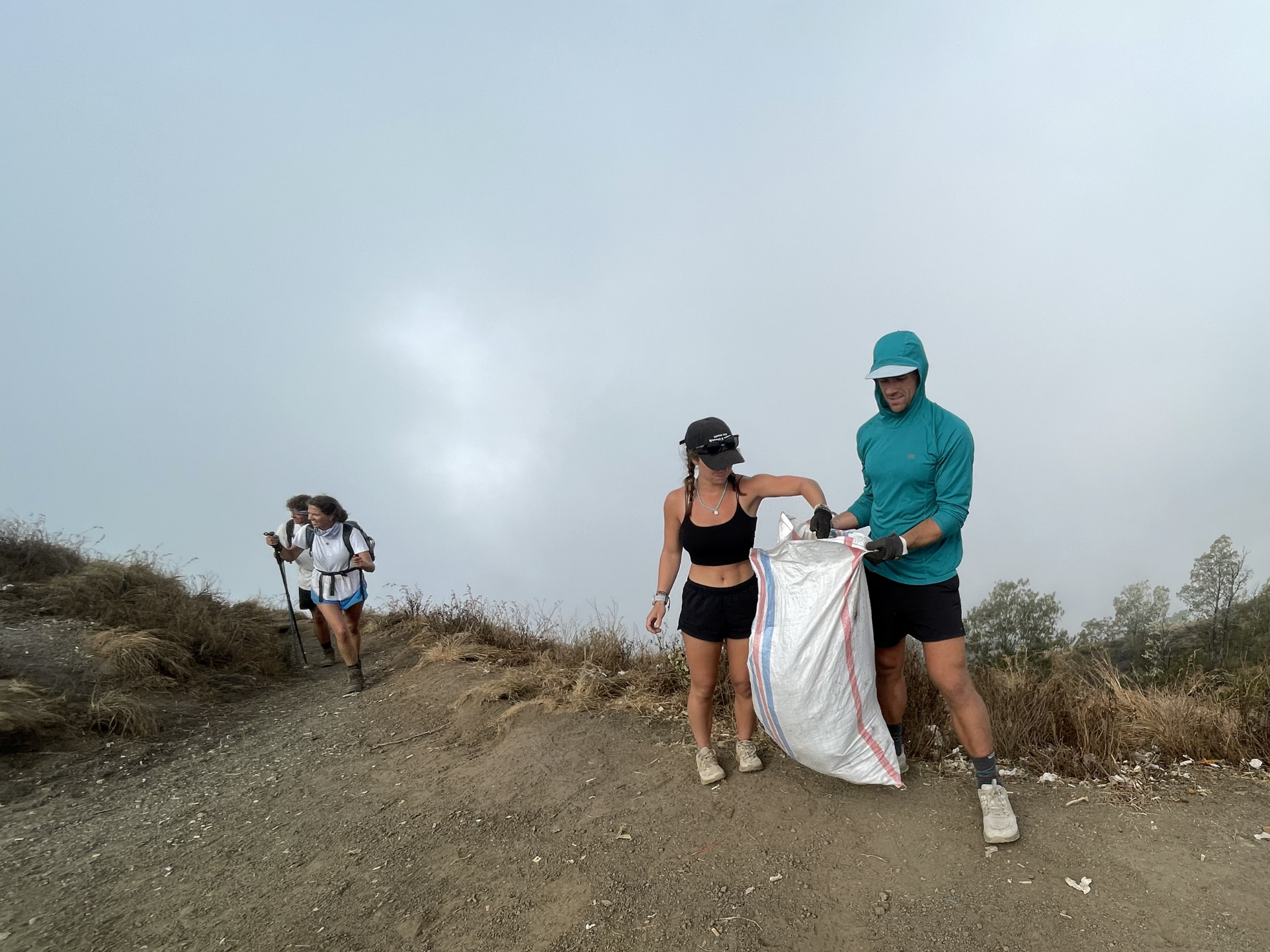
Leave What You Find Don't go off trail to harvest something unique to the region. There are things you may be able to take unless otherwise posted: mushrooms, pine cones, boughs for decoration. But in general, most things are happy in the forest, so leave them there! And looping back to Principle 3, if you find someone else's trash, be a hero and steward of the land. Pick it up!
-
5
Minimize Campfire Impacts This is a stretch for trail etiquette, so don't even bother!
-
6
Respect Wildlife If we are doing all of the above, this happens naturally. Give animals space, don't feed the chipmunks, and don't trample on their homes.
-
7
Be Considerate of Others This is the essence of trail etiquette. Be kind to all. No one wants to hear Coldplay blasting from your Bluetooth speaker. Smile, say hello, spark up a conversation! The most interesting people I have ever met have been on trail, in the mountains, on an adventure.
Who Has the Right of Way?
We've all been there. You've been grinding uphill for 45 minutes, you are in the flow, and you see a group of three coming down the trail ready to stall your hard-earned momentum. You've likely been on the other side too, picking your way down technical rocky terrain when a hiker comes huffing and puffing up the narrow singletrack. What do you do?
A good rule of thumb for mixed use trails: bikers yield to hikers, and everyone yields to horses. Horses can spook easily on trail. Respect the large beasts and their riders! Growing up on a ranch, I can assure you that you do not want to be on the business end of a hind hoof. Give them as much space as possible, let them pass, then carry on with your hike.
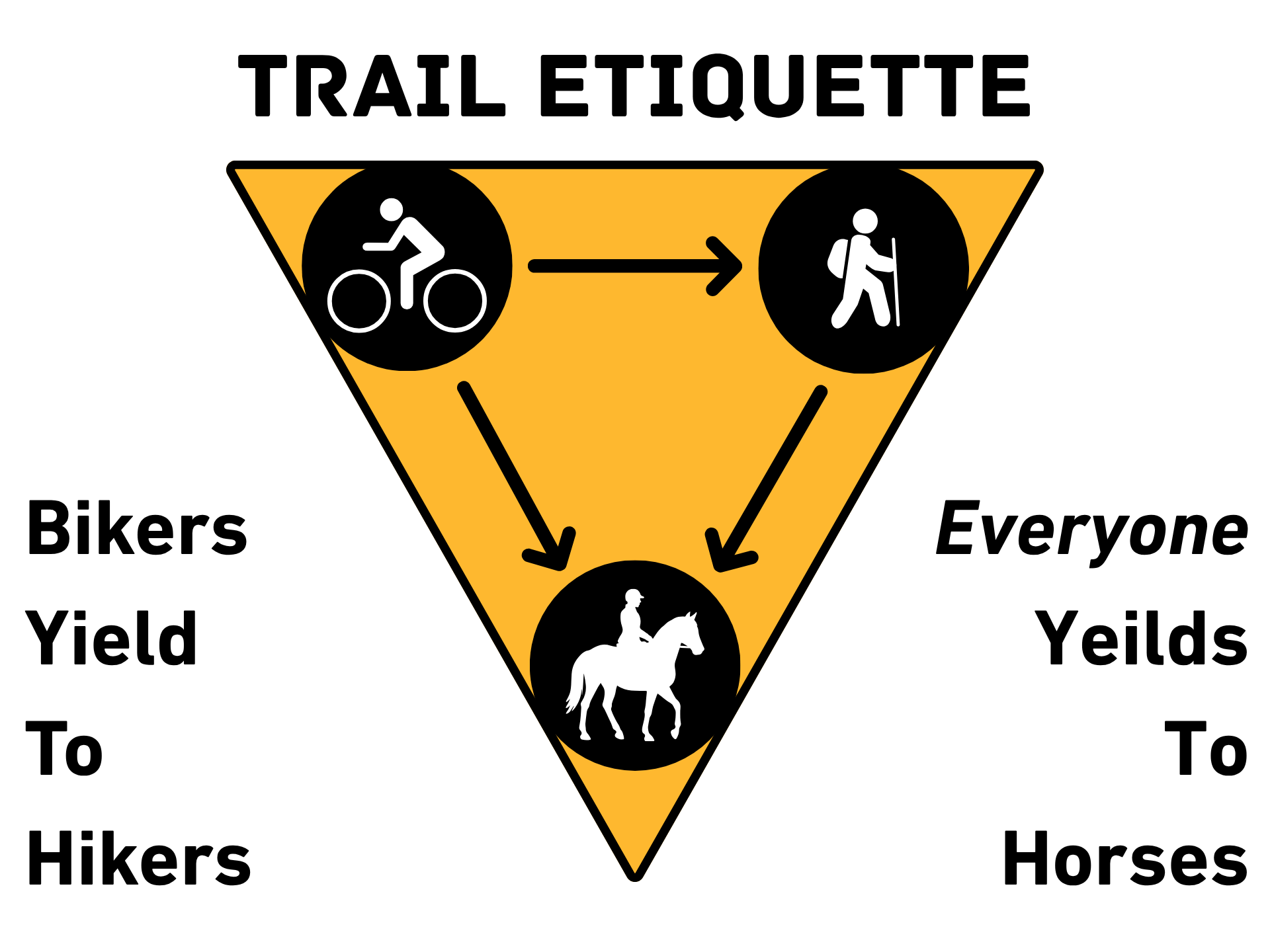
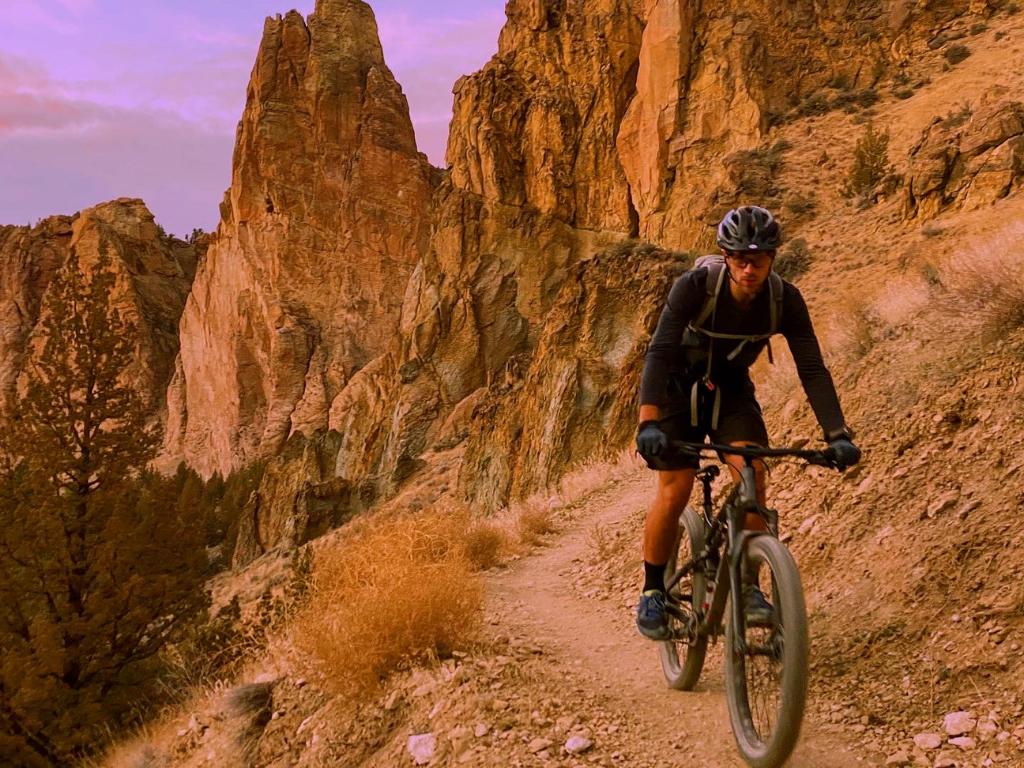
While cyclists do technically have to yield to hikers, hikers should use their own discretion and exercise courtesy. If a rider is cruising down the trail, clearly in control, and you happen to have a nice wide section to step onto, just pull over! It will take them about 0.3 seconds to whiz by and you can go about your day. It is much easier to step off trail for a moment than it is for a cyclist to dismount safely on a narrow descent.
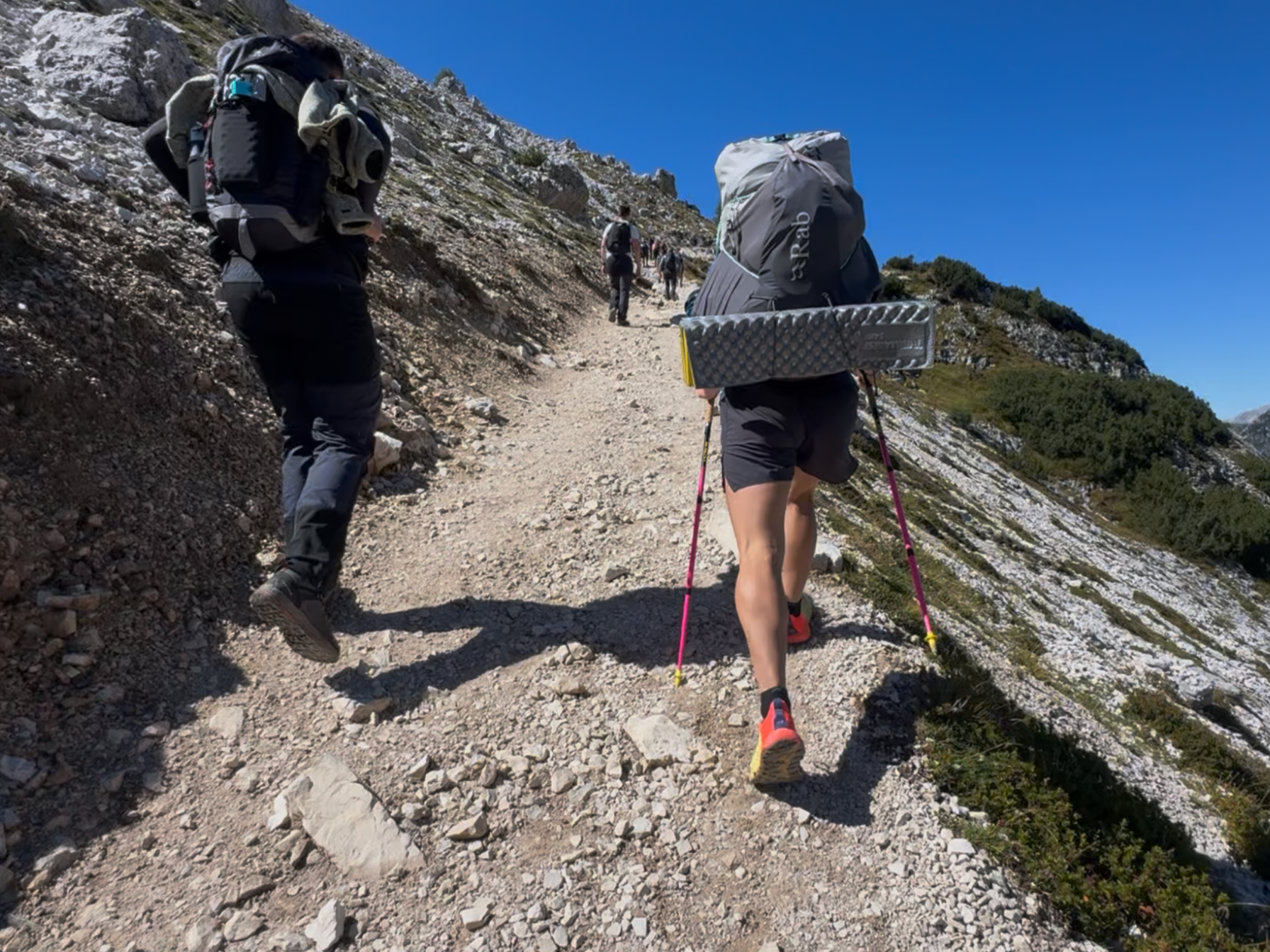
For all foot traffic, the hiker traveling uphill ALWAYS has the right of way. The rationale is that uphill movement is harder, at least in terms of energy expenditure, and therefore earns the right to maintain momentum. Objects in motion tend to stay in motion, and we all know that frequent short stops on the uphill can crush your pace and make that summit feel further and further away. By default, downhill trail goers on bike or foot should pull over at a safe spot and allow uphill traffic to pass.
That said, I would argue that the downhill hiker has to do the dirty work here. Killing your momentum and coming to a screeching halt is objectively harder on the body and will fatigue your legs faster than simply walking uphill and pausing. In practice, you will find that the vast majority of uphill hikers will wave you through with a cheerful "oh no, you go ahead, I needed a breather anyway!"
- Is it safe for me to stop here?
- How fast am I traveling?
- How fast are they traveling?
Safety is paramount. Regardless of circumstances, always ensure a safe foothold and stable stance when timing your stop, whether that means pulling over at a wider section a bit early or finding a secure position at the last moment. Speed matters too. If you are on a casual hike taking in the sights, sounds and smells, and two hardcore trail runners come barreling down the trail, consider stepping aside, letting them cruise by, having a quiet chuckle at the ridiculously short shorts and overpriced shoes, and continuing on at your leisurely pace.
How to Pass and Get Passed Respectfully
As a trail runner, cyclist, hiker and backpacker I have passed and been passed more times than I can count, but it never ceases to amaze me how awkward it can be. Embrace it.
Hikers: Keep Your Head on a Swivel
As a seasoned outdoor professional, nothing frustrates me more than the clueless trail goer. Headphones in, lost deep in thought, slowly slogging up the trail. I have been walking behind people for a good 30 seconds, making my presence obvious through deep breaths, a cough, even a gentle "Hello!" and gotten nothing. When all efforts are in vain, it's time for a louder "Excuse me! Mind if I squeeze by?" And the visibly startled hiker jumps and shuffles to the side with an "oh my goodness, I didn't see you there!" Good thing I wasn't a bear or a cougar, or you would have been a tasty trail snack.
Take the headphones out. Listen to the birds and the rhythm of your breathing. Look back at the amazing ground you've covered. Not to mention the risk management value of having all your senses available to you. What if someone is yelling for help? What if someone above calls out "ROCK!"? Be present and be considerate to others.
When passing someone, be kind. There is a good chance they are struggling. Give them ample warning of your presence and when there is a safe place to pass, don't do so blindly. A simple "on your left," a few seconds of patience, then make your move. The outdoors are for everyone, regardless of fitness level. Be supportive, cheer them on, and encourage them with honest words of affirmation.
Being passed can be a hit to the ego. But I challenge you to feel inspired by the feats of others on trail. Everyone has different goals and fitness levels and we all need to honor that. Fitness shaming is a real thing. While running up McLoughlin on a warm fall day, a woman yelled at me "You're disgusting!" I laughed it off, but it did not feel good. Be careful what you say to others, because you never know whose support you may need later in the day.
If you have an aggressive trail runner breathing down your neck but the trail is narrow and exposed, wait until it is safe, then pull over. You can even say "I'll pull over at the flat spot just ahead, thank you for your patience!" Simple, kind, effective.
Runners: Pass Respectfully
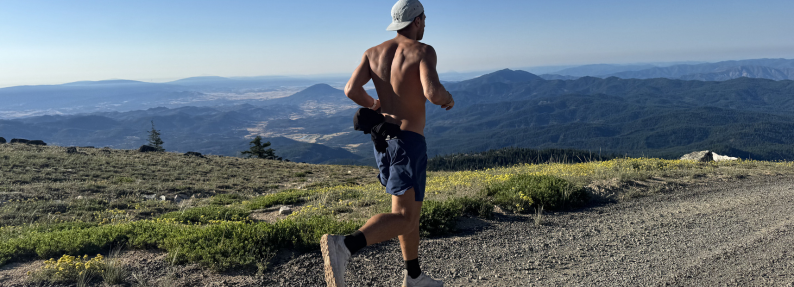
No one cares about your Strava time or your FKT attempt. Being a runner does not give you the right to ignore basic trail etiquette, let alone basic human kindness. Even running downhill, you must give uphill hikers the opportunity to decide whether to stop and let you pass, regardless of their pace or age. If you want to gun for the summit and set a PR, pick a time when the trail is less impacted. Sunday morning at 11am is not your moment.
Don't Stop in the Middle of the Trail
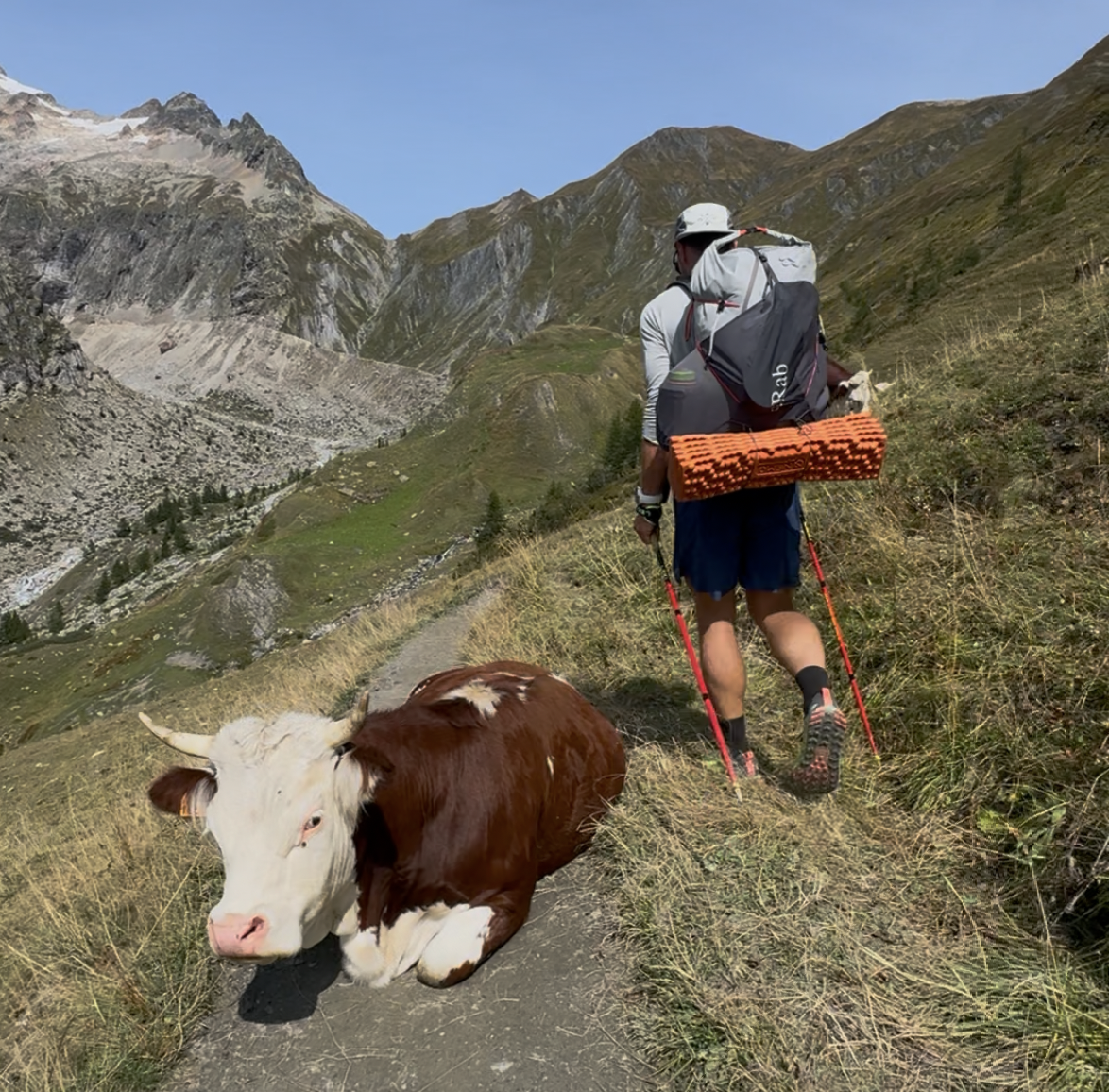
Whether you need to tie a shoe, snap a photo, or answer the call of nature, don't stop in the middle of the trail. Look for a safe spot to pull fully off and do what you need to do. Can't get completely clear? Then find somewhere else.
When you're ready to head back out, look both directions before stepping back onto the trail. If someone's coming, take a few extra moments to enjoy the view, let them pass, and then ease back in. And since most people head outside to escape the crowds, consider waiting another 30 to 60 seconds before following — nobody wants to feel like they've picked up a shadow for the next mile.
Dogs on Trail
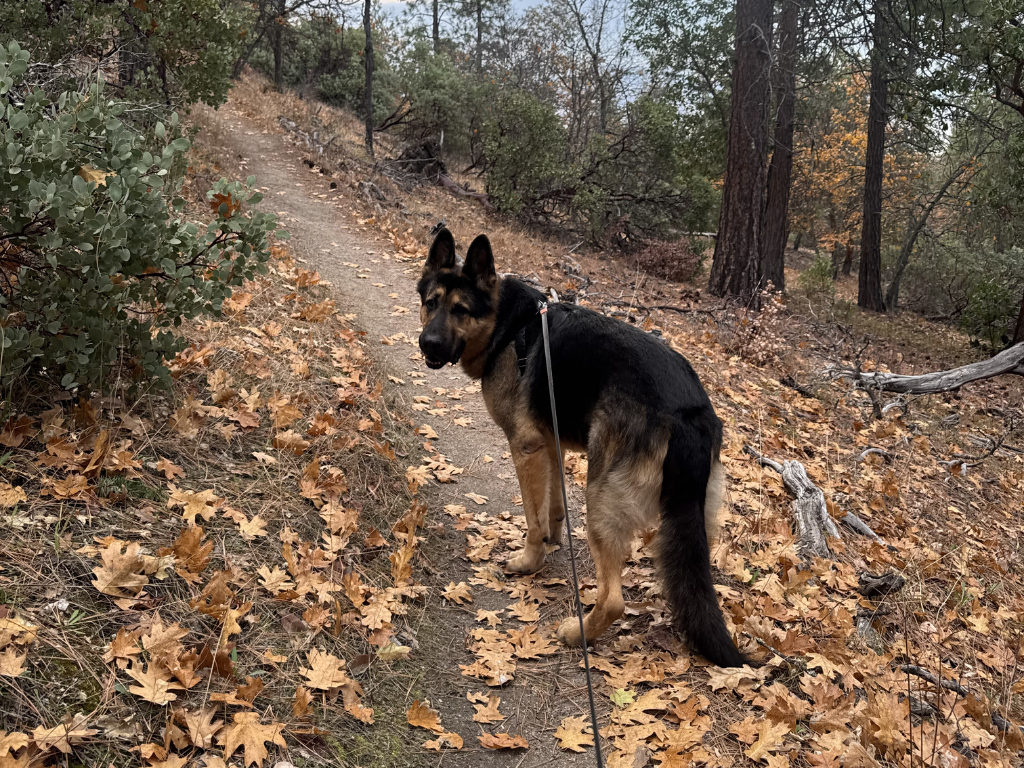
This is a touchy one. Many folks love having their furry friends on trail and there is nothing wrong with that, so long as they are on leash. But Sparky wants to run free! He is an animal after all, shouldn't he be allowed to explore? Here is the difference. A human can determine when it is appropriate to dart off trail. A dog cannot. A human can sense when it might be appropriate to jump on another hiker. A dog cannot. And a human can generally control whether or not they defecate in the middle of the trail. A dog absolutely cannot.
It doesn't matter how well trained you think your dog might be. Too many times I have heard the classic "oh don't worry, he's friendly!" only to have the friendly dog nipping at my heels moments later while I hurdle the ferocious beast. Usually followed by "oh that's weird, he's never done that before!" Your dog is not any more special than the next one. Dogs can have a tremendous impact on the natural environment, which is why they are banned entirely from many national park trails. So if you do bring your dog on trail, train them well, keep them on leash, and please pick up their sh*t.
Be a Good Steward and a Good Human
How often have you seen a piece of trash on trail? Probably many times. How often have you picked it up? Probably not as often as you could. Being a good steward goes beyond packing out your own wrappers. It means being an active, positive member of the outdoor community.
At OAT, we have the privilege of supporting a lot of people in their pursuits of getting outside. With that comes a responsibility to lead by example. We take that seriously. It is our genuine duty to add value to this space in every way we can, and that starts with the basics: picking up the granola bar wrapper someone else dropped, smiling at the person who looks like they are having a tough day on trail, stepping aside for the dog walker who needs a little more room. The small acts add up and they matter.
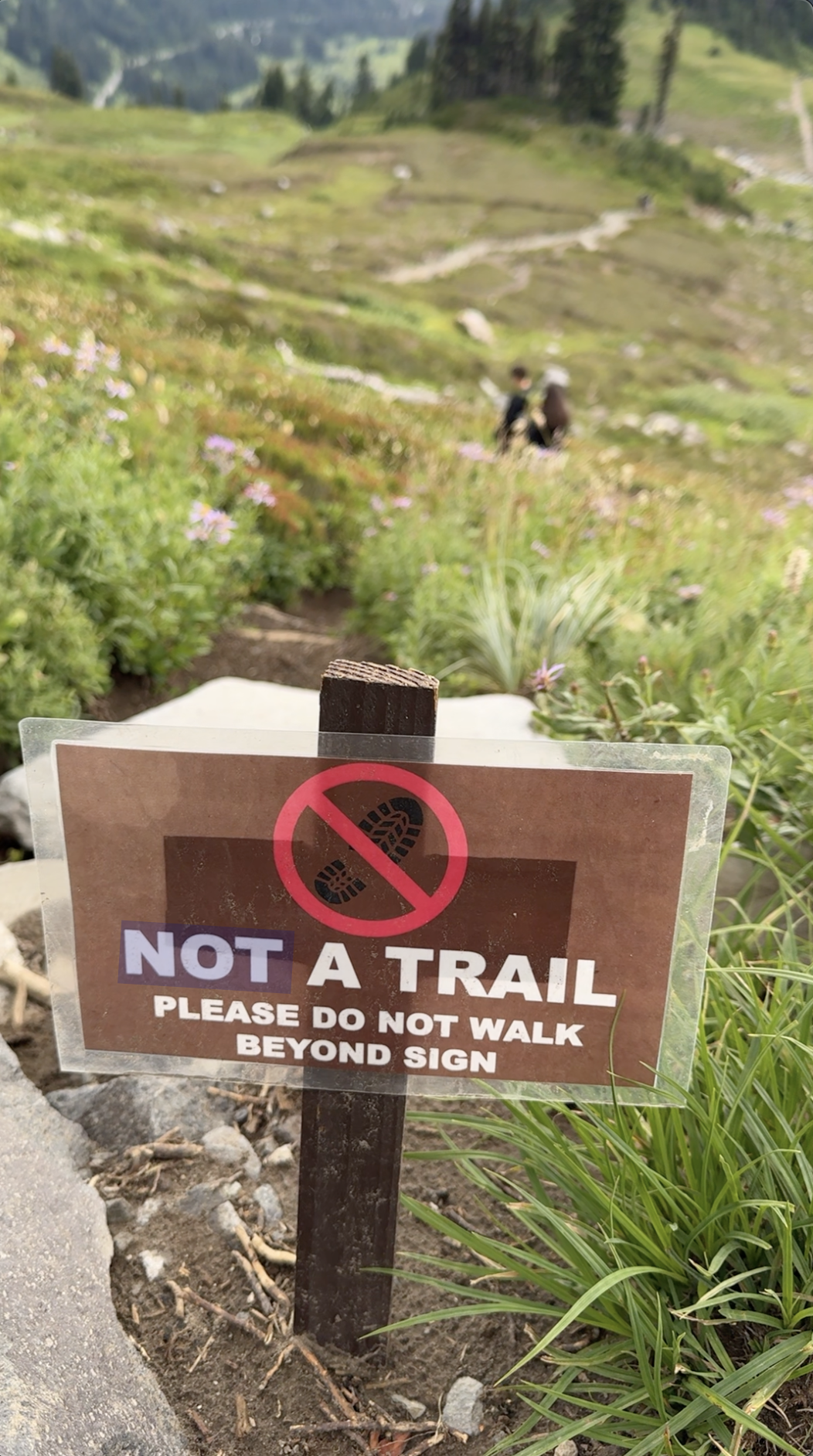
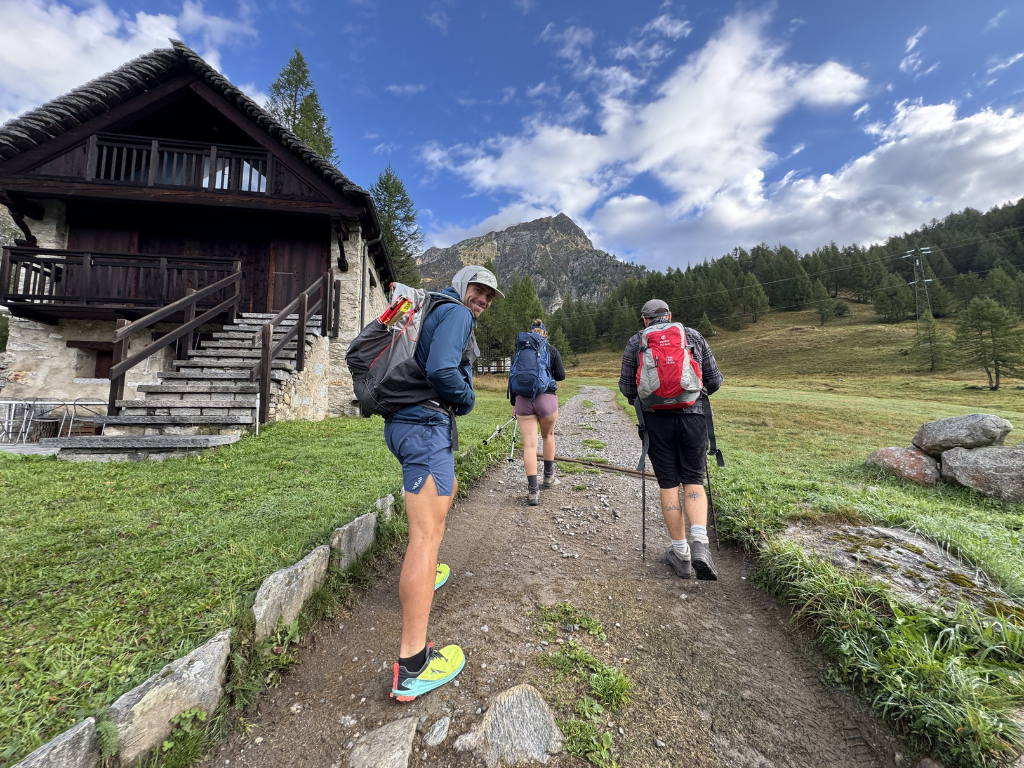
If you take nothing else from this article, be nice to all on trail: people, wild animals, and the environment. While our individual motives for getting outside are unique, the desired outcomes are universal. To experience peace, tranquility, and a greater connection to ourselves and the natural world. Be quiet, enjoy the trail, smile and say hello!